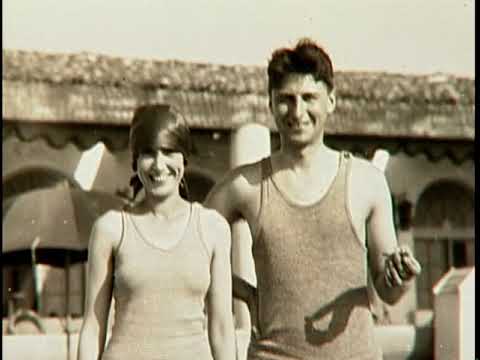
Theodore Geisel once opened his front door to find a child standing on his step, asking to see Dr. Seuss. ‘I am Dr. Seuss,’ he said. The child looked up, decided he was not, and walked away. Geisel thought it was funny. That gap between who the world imagined and who actually lived in the hilltop studio above La Jolla, California, is the story of the best-selling children’s author of all time. Born on March 2, 1904, in Springfield, Massachusetts, Ted Geisel would spend his life inventing a persona joyful enough to reach millions of children and private enough to keep almost all of them at arm’s length.
A Springfield childhood that never really ended
The Springfield that shaped Geisel was full of useful raw material. His neighbors had names like Terwilliger, Bickelbaum, and McGilligott, names that would reappear in his books decades later as if they had been waiting there all along. His mother, Henrietta, the daughter of a German baker, read to Ted and his sister Marnie every night, cycling through a sing-song list of pie flavors that would roll from the sensible into the absurd: apple, mint, strawberry, and then squash. Even in his eighties Geisel could still perform it. His father ran the family brewery, then the Springfield zoo after Prohibition closed the brewery, and took Ted to see the animals every Sunday, handing him a set of pencils and telling him to draw. ‘I was trying to do real animals,’ Geisel later said, ‘but I’d put too many knuckles on them.’
When the United States entered World War One, the family’s German roots made Ted an easy target. Schoolmates called him ‘that drunken hun.’ He never forgot it, and he never again fully trusted the instinct of groups to treat individuals fairly. By the time he reached Dartmouth, he was gravitating toward the campus humor magazine rather than the lecture hall, writing nonsense and doing cartoons that, as one friend observed, seemed to surprise even their creator.
He added the ‘Dr.’ to his pen name at the humor magazine, explaining with a straight face that it was compensation for the doctorate he never finished at Oxford. The ‘Seuss’ part came from his mother’s maiden name, pronounced ‘soyce’ in the German way. Everyone else just looked at it and said ‘Zeus,’ and that is what lasted.
The cat arrives, and everything changes
In 1957, after a year of counting, recounting, and rewriting around a list of exactly 225 words, Geisel published ‘The Cat in the Hat.’ The assignment had come from a national debate about why children could not read, and his own response to the word list was blunt: ‘I read it 40 times and got more and more discouraged.’ Desperate, he decided to write a story around the first two words on the list that rhymed. Cat. Hat.
Newsweek called him the Muppets’ Milton. Within three years the book had sold nearly one million copies at a dollar ninety-five each. His royalties the year before the Cat in the Hat had been five thousand dollars. By 1959 they totaled two hundred thousand dollars.
For the follow-up, his publisher Bennett Cerf bet him he could not write a beginner book using only fifty words. Geisel retreated into his studio for a solid year. What emerged was ‘Green Eggs and Ham,’ the best-selling Dr. Seuss book of all time. As one collaborator put it: ‘He proved something in it that no one else could possibly do – that no matter what strictures you put on you, you’ll still write something absolutely incredible.’
Geisel covered his studio walls with cork board and laid each book out like a storyboard. Action on a page always moved left to right, training the eye to follow text the same way it followed the illustration, nudging the reader to turn the page and find out what happened next. He once said he wrote more than a thousand pages before he was satisfied with sixty.
The vodka, the chain smoking, and the creatures on the wall
The private Ted Geisel was a fantasist who would make his drink, light his cigarette, go into his study at midnight, and start thinking. He chain-smoked when he worked and drank vodka on the rocks when he relaxed. He mounted creatures built from shells, beaks, and horns his father sent from the Springfield zoo, and they hung on his studio walls for the rest of his career. He wrote working notes to himself in verse. When he was deep in ‘Dr. Seuss’s ABC,’ a page arrived at his publisher formatted as if it were a real spread, reading: ‘Big X, little x, x x x x x – someday kitties you will learn about sex.’ He signed it ‘TSG.’
His wife Helen, whom he met at Oxford after she told him he was crazy to become a professor, was the person who made the work possible. She managed the household, edited the manuscripts, talked collaborators down from the ledge when Geisel declared everything finished too early, and quietly retrieved pages he was about to throw away that turned out to be important. ‘He wouldn’t have been Dr. Seuss without her,’ said one close friend. ‘He trusted her absolutely.’
In October 1967, Helen Geisel died by suicide in their home. The letter she left behind asked Ted to remember the fun they had through all the years. Geisel was, by all accounts, simply numb. He married Audrey Stone Diamond in August 1968, and those who knew him said the color that entered his life afterward was visible in his wardrobe alone: coordinated shirts, combed hair, an energy he had not shown in years.
The last book on the drawing board
In his final years, Geisel rarely left the hilltop studio. He had suffered a heart attack, undergone cancer treatment, and watched his eyesight fail through three years of surgeries before it returned. Roughly three weeks before he died, he told his staff he did not want to sign any more books. No more cat notes. His collaborators understood what that meant.
On September 24, 1991, Theodore Geisel died in his studio, a few feet from his drawing board and the creatures he had built. He was 87 years old.
The letter that never quite resolved
Helen Geisel’s farewell note sat beside her, folded. ‘I love you so much,’ she had written. ‘I am too old and enmeshed in everything you do and are that I cannot conceive of life without you.’
Every spring, ‘Oh the Places You’ll Go’ returns to the bestseller list. It has never really left.