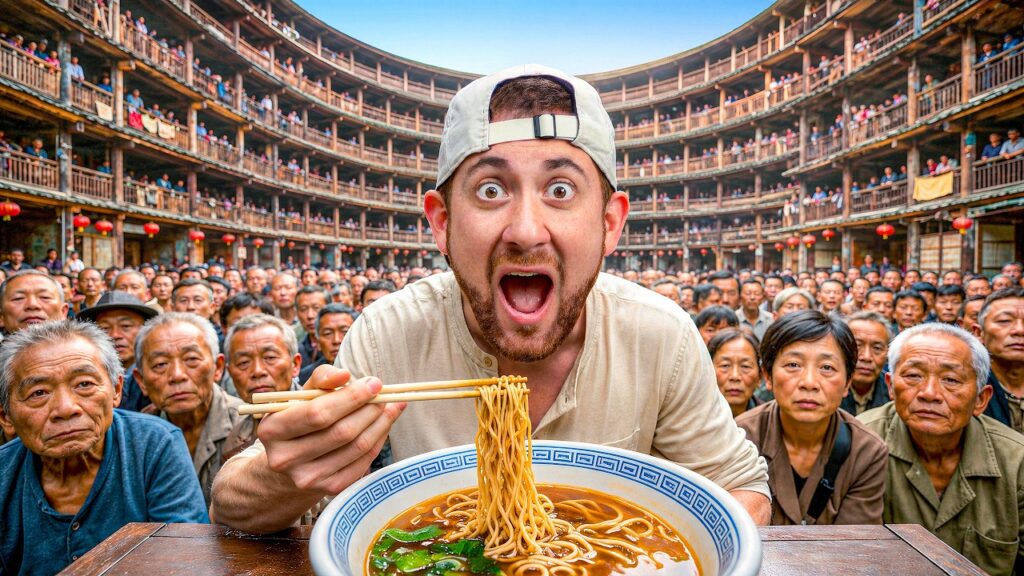
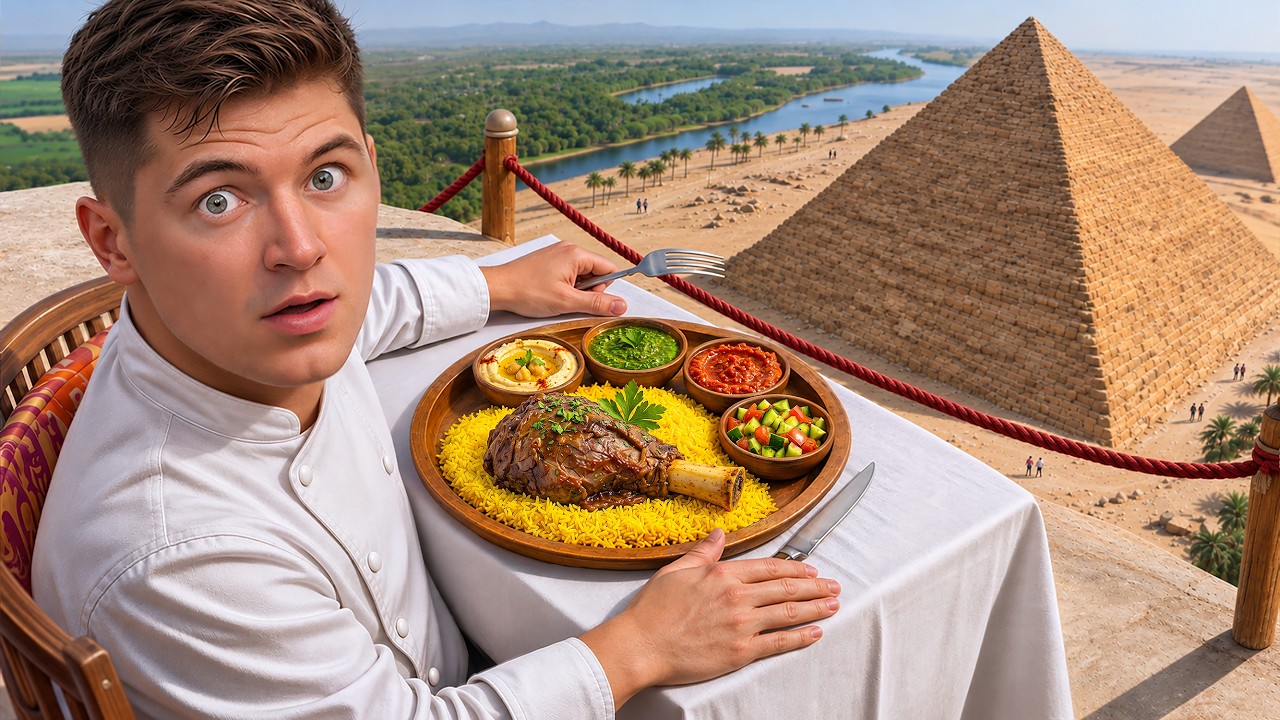
Chef Nick DiGiovanni walked into a building with no sign on a quiet Tokyo street and sat down at one of eight seats inside a sushi counter where you can only get in if you know the chef. That detail alone captures what this entire journey is about: the world’s most extraordinary restaurants are not always the loudest ones. Over months of travel across London, Lyon, Sydney, northern Spain, New York, Sri Lanka, Tokyo, and back to London, DiGiovanni worked through a personal bucket list of the planet’s most celebrated tables, bringing a different friend to each one and documenting what genuinely great food feels like when you encounter it for the first time.
London to Lyon, where Indian royalty met French cinema
The journey opened at what DiGiovanni calls the world’s most famous Indian restaurant in London, with his friend KSI in tow. The meal moved through four courses: papadums and chutneys to start, then a second round of tandoori meats including a quail kebab and lamb chops grilled in a clay oven, earning the kitchen its two Michelin stars since 2024. The third course brought three curries alongside what DiGiovanni called the most beautiful garlic naan he had ever seen. The biryani arrived sealed under an edible dome, releasing a blast of mint steam when opened. KSI, still working through the lamb curry, was licking the plate. Some food critics, DiGiovanni noted, have called it the best meal of their lives. ‘Phenomenal, exquisite, exuberant, sensational, extravagant, unreal,’ KSI offered, apparently having run out of adjectives.
From London, DiGiovanni flew to Lyon for Paul Bocuse, a restaurant that has held three Michelin stars for over 55 years and the one that inspired the fictional Chef Gusteau in Ratatouille. He brought his friend Seline precisely because Ratatouille is the favorite movie of both of them. The kitchen was enormous, its pastry section alone bigger than most full restaurants, and their pastry chef Benoit Charvet holds the title of world champion of frozen desserts. The meal peaked at a chicken cooked inside a bladder for 290 euros. DiGiovanni lifted the skin to show black truffles slid underneath before cooking, then said quietly: ‘This marks the first time I think I ate real chicken.’ Seline agreed.
Sydney to Spain, where fish became meat and beef became philosophy
In Sydney, DiGiovanni met head chef Josh Niland, a man who approaches fish the way a butcher approaches a side of beef. At St. Peter, ranked the best restaurant in Oceania in 2026, Niland uses close to 100 percent of every fish, where most chefs use less than 50. The kitchen produces tuna salami, fish bone-in chops, and a dish they call ‘fish, no chips’: fried barramundi over a vivid green curry sauce. DiGiovanni’s traveling companion Bashi, who had flown 10 hours from Japan for the meal, admitted he had no idea the restaurant was consistently ranked in the world’s top 50. The double yellowfin tuna cheeseburger, built from scraps, was DiGiovanni’s favorite thing on the table.
From Australia, DiGiovanni traveled more than 24 hours to reach a farm in northern Spain where Chef Jose raises 400 oxen on acorns, classical music, and long rest, believing stress destroys flavor. His restaurant, buried 25 meters underground, is officially ranked the number one steakhouse in the world. Some of the meat hanging in the cave-like aging room has been curing for several years, with a few cuts taking over 20 years from farm to table. DiGiovanni ate an ox sirloin grilled over fire at the single table in the entire restaurant and said, without hesitation, that it was the best bite of beef he had ever had. A 13-year-aged cut arrived in paper-thin slices. ‘Think of the best charcuterie you have had in your life,’ he told his companion Bryce, a winner of his Food Network show. ‘Add every one of those moments together. It still would not be one hundredth of the flavor in that piece of meat.’
New York’s best pizza, then the sushi counter with no sign
Back in the Western Hemisphere, DiGiovanni stopped at Una Pizza Napoletana in New York, technically tied for the number one pizzeria on the planet alongside a pizzeria in Italy he had already visited with his brother Pete. The chef, who makes every single dough ball and every pizza himself, closes the restaurant on days he is absent. His oven design has not changed in 2,000 years, modeled on ovens visible today in Pompeii. The garlic comes from New Jersey. The olive oil is imported from a small town just north of Naples. DiGiovanni and Pete both tried to make a pizza. Pete tore his dough. DiGiovanni’s held together but his launch into the oven got complicated. Two miles away, at Atomix, the number one restaurant in North America and ranked as high as sixth in the world, DiGiovanni ate 11 courses of reimagined Korean cuisine with 12 seats total and Kevin Jonas as his dinner companion. The courses arrive with what Jonas described as Pokemon cards for Michelin-star restaurants, small printed cards detailing each dish.
Then came Tokyo. Higashi Azabu Amamoto operates behind an unmarked door and seats eight people. The chef gave DiGiovanni and his friend Pat permission to document the meal, breaking his own standing rule against filming. The 23-course omakase included firefly squid available only a short time each year, whale tail sashimi praised for fatty marbling comparable to Wagyu beef, and octopus eggs that melted rather than chewed. DiGiovanni said it was the best meal of his life. Articles exist online, he mentioned, of people who cry when they eat here. Pat said he might cry. DiGiovanni said he would be annoyed.
The journey ended at Restaurant Gordon Ramsay in London with Ramsay’s daughter Tilly, who had never eaten the full seafood ravioli that has anchored her father’s menu since the restaurant opened in 1998. It was awarded three Michelin stars in 2001. The ravioli is filled with lobster, langoustine, and salmon. ‘Dad always said this is not just the kind of food you go and have,’ Tilly said. ‘This is a real special moment.’ The apple crumble souffle arrived for dessert, airy and impatient, and DiGiovanni asked whether she could recreate it at home. ‘Absolutely not,’ she said. He gave the same answer.
The table set for one
In the underground restaurant in northern Spain, there is exactly one table in the entire dining room.
It is set for the evening whether anyone is booked or not, surrounded by cave walls and the faint smell of aged meat drifting in from the curing room down the corridor. Chef Jose cooked over the fire himself, right in front of his guests, and when the final steak came out it was so large it arrived in sections, the bones presented separately on their own board. DiGiovanni looked at it for a moment before picking up his knife.
 Wake up to Only Happy News!