Robin Greenfield stepped onto a beach with a five-gallon bucket, filled it with ocean water, and carried it home to boil down into a single pint jar of salt. That was not a survival stunt. It was Tuesday. For one full year, beginning October 9, 2025, the activist and forager from Northern Wisconsin ate and drank nothing that did not come directly from the living world around him, no grocery stores, no restaurants, no garden, no gifts, no trades, and no exceptions, not even for a meal with his mother.
The question most people never think to ask is whether the land can still actually feed a person. Greenfield spent a year finding out, and the answer carried consequences beyond his own plate.
How 280 foods replaced a supermarket
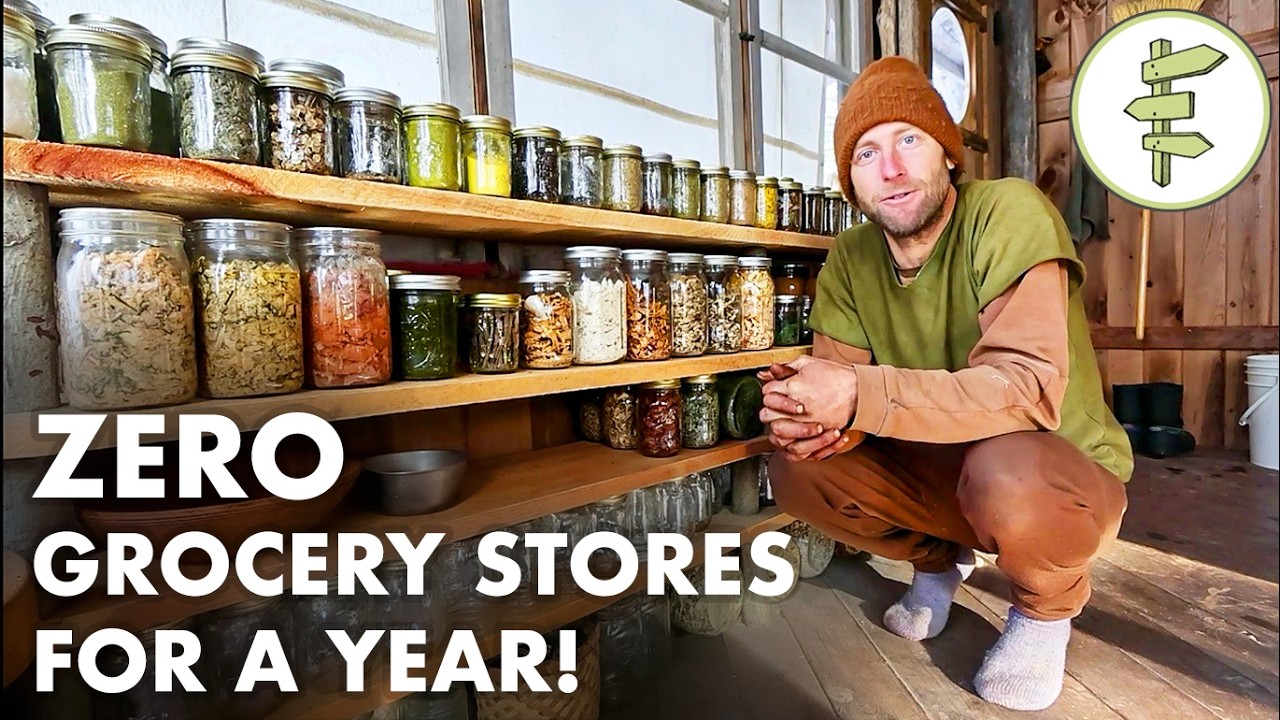
Greenfield spent three months before the year began making lists: what to harvest, when it would be available, how much to store. That preparation mattered more than any single foraging skill. He dehydrated greens, nettles, and herbs, made fruit leathers, water-bath canned applesauce, pear sauce, and plum sauce, and pressure-canned fish and venison so he could keep eating on the road while hosting over a hundred foraging events across the country.
His core daily meal was a one-pot cook: wild rice with either fish or venison, a mix of wild greens including wood nettle, watercress, mustard, and dock, and herbs like wild onion and bee balm, which he described as tasting essentially like oregano. Fruit sauces made from highbush cranberry, wild grapes, aronia, and chokecherry came alongside most meals. Maitake, chicken of the woods, boletes, and chanterelles gave him mushrooms in bulk. He harvested salmon and whitefish from Lake Superior, caught smelt by net in spring, and foraged mullet while traveling through Florida. Deer came not from hunting but from car-killed animals recovered from roadsides. His first attempt at hunting a deer ended in a missed shot.
The first six months passed without any added sugar. Then spring arrived and he tapped enough maple syrup to yield six pints, rationing roughly one pint per month through the second half of the year.
The moments the plan nearly broke
About halfway through, Greenfield ran out of wild rice, the calorie anchor of his diet. ‘I could just buy some wild rice,’ he admitted. ‘It’s wild and I’d be getting it from a local person.’ He came close. He held the line and pushed through summer on extra fish, calorie-dense fruit, and nuts until fall abundance returned. Around the same point, blood work revealed elevated mercury levels, almost certainly from heavy fish consumption. Low energy followed for weeks before he could adjust.
He started the year at 155 pounds, dropped to 145 pounds at his lowest, and finished at 151 pounds. Four pounds lighter across twelve months without a single grocery run.
The time cost was steep: he estimates 20 to 80 hours per week depending on the season, with the high end hitting during the full crush of fall harvest when there was simply too much to process to slow down.
A bucket of ocean water and a jar of salt
That five-gallon bucket from the beach, left in the sun long enough for the water to evaporate, became the detail that stayed. One pint jar of salt. Enough to season a year.
Greenfield finished the year with his pantry still stocked and no intention of returning to the global industrial food system. Over 280 different foods and medicines foraged in total. He said it plainly: ‘Every plant that I forage is an act of freedom. In this year of foraging, I have been foraging for my food and medicine, but really at the core of it, I’m foraging for my freedom.’ The salt jar is still on the shelf.
 Wake up to Only Happy News!