** Disclaimer: This video may contain mature themes, language, or content not suitable for children. Viewer discretion is advised, and parental guidance is strongly recommended. **
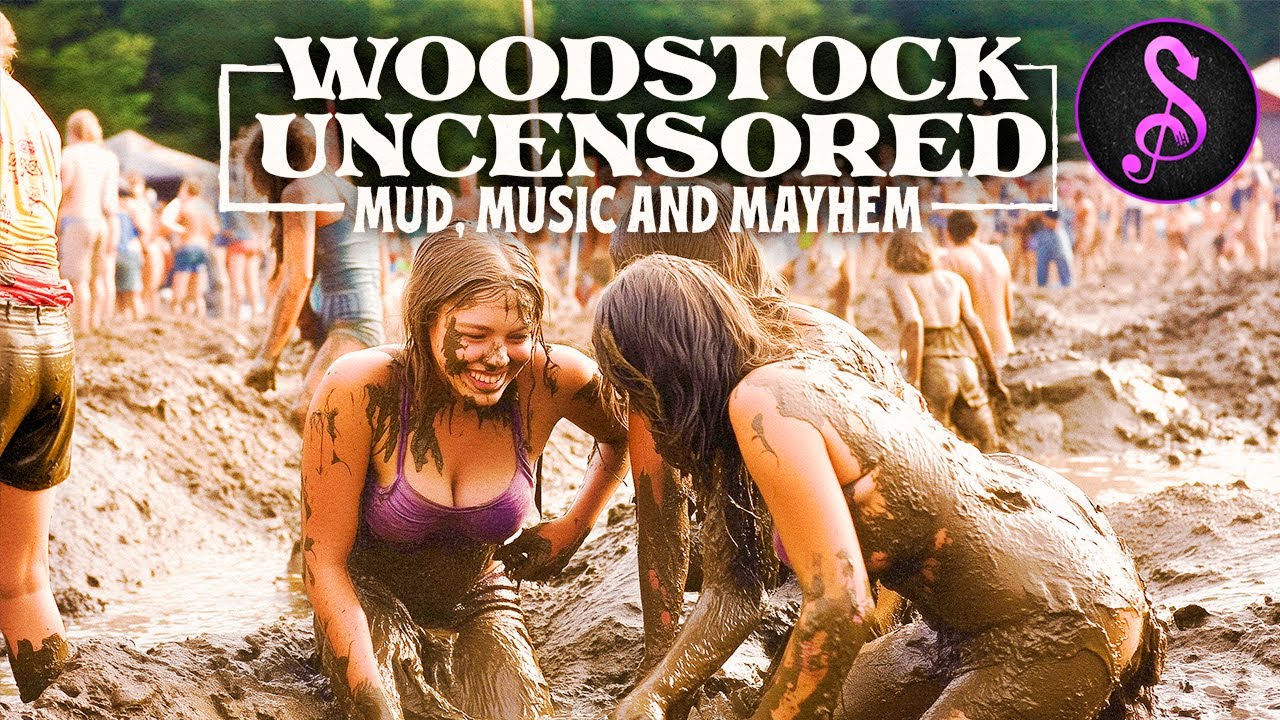
Richie Havens stood in the wings of an unfinished stage at Max Yasgur’s dairy farm in White Lake, New York, sweating through his clothes and stalling for time, because there was literally nobody else to send out. Every other act was stranded somewhere on a road that had stopped moving. The festival had not yet started, and already nothing was going according to plan. What unfolded over the next three days in August 1969 was not the smoothly executed cultural milestone that hindsight tends to make it. It was a lurching, improvised near-disaster that somehow became one of the most defining moments of the twentieth century, held together by a borrowed farm, a banker in pajamas, and the sheer refusal of half a million people to go home.
How a recording studio pitch turned into something nobody had planned for
The whole thing started as a business compromise. John Roberts and Joel Rosenman were building a recording studio in Manhattan in 1968 when a lawyer named Miles Lurri introduced them to Mike Lang and Arty Kornfeld, who showed up one February morning in 1969 pitching their own studio project up in Woodstock, New York. The two sides disagreed on the format from the start. Roberts and Rosenman wanted a festival. Lang and Kornfeld wanted a studio. The deal they struck was a hybrid: do the festival first, use the profits to finance the studio.
Getting the talent signed was its own ordeal. Pete Townshend of the Who kept saying no until a spaghetti dinner at a booking agent’s apartment stretched past 5:00 in the morning, at which point Townshend, backed into a corner of the room, finally said ‘All right, all right. I’ll play the thing. Can I go to sleep, please?’ Crosby, Stills and Nash agreed after a phone was stuck out a trailer window so Stephen Stills could hear his own record blaring over the test sound system. Iron Butterfly sent a telegram demanding helicopter transport directly to and from the stage. The reply, worked out carefully with a Western Union operator, contained no profanities on its face, but read down the page spelled something else entirely.
The site that nearly wasn’t, and the farmer who made it real
The festival’s first chosen location in Walkill collapsed under local opposition. Town meetings turned hostile. Midnight phone calls threatened arson. A noise ordinance was passed specifically to shut the event down, one so strict, as Roberts later noted, that the only organization capable of complying would have been a monastery whose members had taken a vow of silence. The search for a new site began with roughly 30 days to go.
Max Yasgur had been following the Walkill fight in the news. He called them. Mel Lawrence and Michael Lang drove out, crested a hill on Herd Road, looked down into a natural bowl in the land, and knew immediately they had found the place. Yasgur’s terms were straightforward: ‘You’ll have to clean up after yourself.’ His power cables were buried four feet underground and couldn’t be extracted even by bulldozer, so he simply told them where to find everything they needed.
With the site secured barely a month before the festival, a thousand workers descended on the property. There were no existing roads. Wells had to be dug. Power and phone lines arrived in the final hours. The permit for the White Lake show was not obtained until hours before the gates were meant to open. A local inspector, aware that a stop-work order would make things worse, developed a quiet arrangement with the production team: he would walk the site posting notices, and someone would follow behind him removing them.
By Friday morning, 50,000 people were already sitting in the performance area before a single ticket booth had opened. John Morris walked on stage and told the crowd what they already knew: it was a free concert. The producers were going to take, in his words, ‘a big bath.’
The logistics that followed were genuinely improvised. Artists stranded at hotels were airlifted in by a fleet of eventually 23 or 24 helicopters, including some military ones. Jimi Hendrix, unable to get a helicopter, paid a group of kids with a station wagon to drive him in. He arrived in a light blue Ford Falcon, stepped out in full regalia, and unloaded his gear behind the stage. The Hog Farm free kitchen fed somewhere between 160,000 and 190,000 people using 160,000 paper plates and five stoves running simultaneously. A New York State health inspector arrived on Friday to inspect the facilities and might have shut the whole thing down, except his 15-year-old daughter wandered into the crowd and he spent the next three days looking for her instead.
Sly Stone’s manager told the production team Sly ‘didn’t feel the vibes.’ The Who’s business manager refused to let the band play until he had cash in hand. At midnight on Saturday, the band’s banker, Charlie Prince, got into a helicopter in his pajamas, flew to his own bank, and located cashier’s checks that had accidentally been left out of the time vault.
The corner of the field where the peace symbol got built
Fifty or sixty people remained on the field after the helicopters began pulling the producers out on Monday. They were dragging garbage into bags and old clothes and arranging everything into a large peace symbol in the middle of the field.
Max Yasgur called about a month after the festival ended and reached out to one of the producers, who was 24 years old at the time and buried in lawsuits, debt, and press coverage describing the event as a nightmare. Yasgur had a suggestion: come up, milk cows for a month, tell nobody where you are, and sleep well every night. The offer was almost accepted.