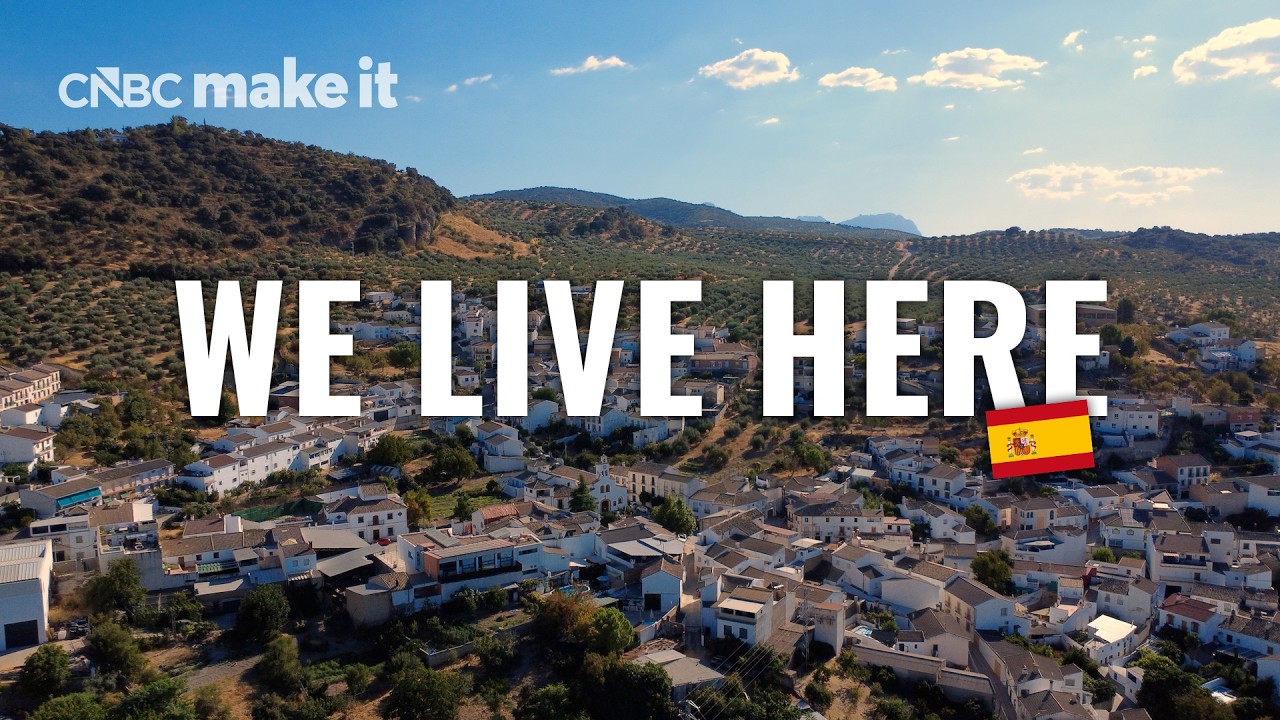
The former chicken pen and pig pen behind the house in Gador, Spain, is now a pool surrounded by mountain views. That transformation, mundane in its description and staggering in its effect, captures exactly what this American family was chasing when they wired $72,000 for a mortgage-free home in a small Andalusian village and started over.
A list on paper that pointed south
The couple, both artists and craftspeople, had started with a simple exercise before leaving the United States. They wrote down what needed to change. Quality of life came first. Time with their daughter came next. Then affordability. Spain kept rising to the top of the list, but the early research delivered a gut-punch: rents in many Spanish cities ran higher than the mortgage they were already paying back home. They almost talked themselves out of it.
They did not stay discouraged for long. The draw was Andalusia, the southern region, hot and familiar in a way that reminded one half of the couple of the Dominican Republic. The village of Gador sits within easy reach of Malaga, Cordoba, and Granada, each roughly an hour away. When the right house appeared, a phone call followed almost immediately.
Because they arrived without the legal paperwork required to take out a local mortgage, they paid cash outright. Then they spent another $60,000 on renovations, keeping the traditional Spanish tilework that runs through every room and adding their own layered touches: a maximalist bedroom anchored in pink, a Barbie collection headlined by an Afro-Latina Celia Cruz doll, textiles and handmade sandals from one partner’s craft practice, and multimedia drawing and photography work from the other.
What a month actually costs in Gador
With no mortgage, the household expenses compress around the basics. Electricity and water together run about $115 a month, varying by season. Health insurance for the family costs $220. House insurance comes to $58. Groceries land around $300. The honesty in how they describe work-life balance is worth pausing on: the slower pace is real, but the visa requirements that govern their stay push them to work with a discipline that surprises even them.
The rhythm of a typical day starts with the school run, moves through client work or a project in the backyard, includes a morning coffee somewhere in there, and only picks up pace once the town itself comes alive at night. The local bars fill up late. There might be a class. It is different every day.
Their daughter is learning something they did not expect to be able to teach her quite so directly. She arrived wired for instant gratification, they say, and the village kids around her are recalibrating that. In a place where everyone knows everyone and children walk to the park and return at midnight without worry, she is learning grit alongside a different pace of childhood.
As one of them put it about the future: ‘Forever doesn’t exist in our world.’ The plan is not to stay locked in place but to own the flexibility the mortgage-free home now buys them, including the possibility of going back and forth without being trapped by either side.
The office with the church in the window
Up on the second floor, one of the rooms has been converted into a workspace. The view from it takes in the village church and the mountains beyond it. That room is where most of the working hours go.
The pool that replaced the animal pens still has the Andalusian mountains as its backdrop every afternoon. From a chicken pen to a personal oasis is roughly $132,000 in total, paid in full, with no monthly payment waiting on the other side.