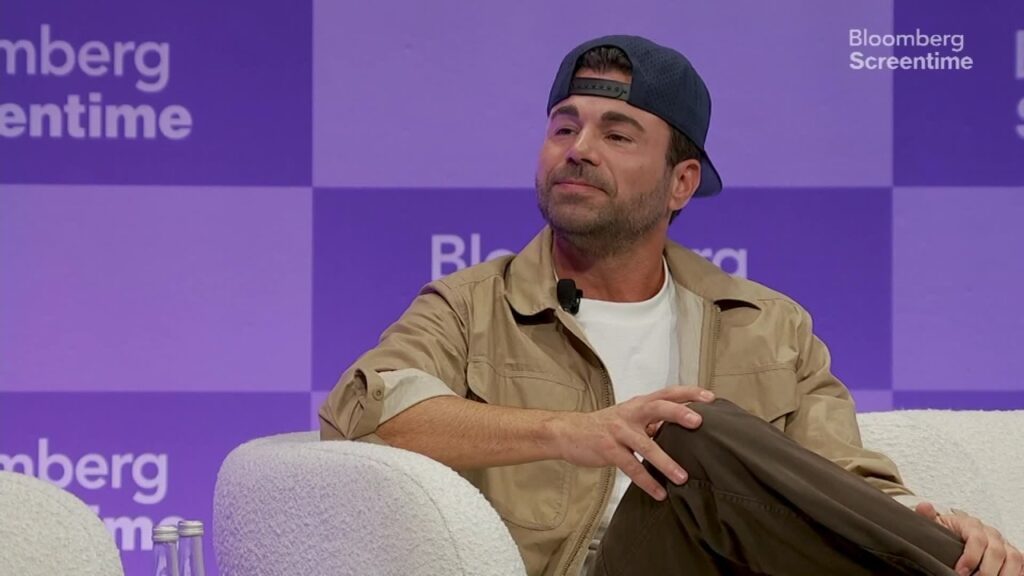
Mark Bernardo picked up a period-correct Breitling Top Time and held it next to a modern version of the same watch, the chronograph’s bezel catching the light in a replica of M’s office built precisely for this moment. Bernardo, director of editorial content at Teddy Baldassarre‘s platform and a self-described James Bond superfan, had gathered a collection that had probably never shared a room before, watches spanning more than six decades of cinema, each one a small artifact of its era. Because Bond’s watches have never been mere props: they have been weapons, communication devices, and a running index of what the world thought sophistication looked like in any given decade.
The novels set the template before any camera rolled
The story begins not on a soundstage but at a writer’s desk in Jamaica. Ian Fleming, a former naval intelligence officer who had flunked out of a military academy and briefly tried stockbroking, sat down to invent a spy he called a blunt instrument, a man without many layers whose job was to catalyze events around him. Fleming chose the name James Bond from an ornithologist’s field guide specifically because it sounded bland. When Casino Royale was published in 1953, the character’s watch was barely mentioned. It took the second novel, Live and Let Die, for Fleming to describe it at all, and when he did, the phrases he used, ‘big luminous numerals, expanding bracelet, stainless steel case,’ matched almost exactly the Rolex Explorer that Fleming himself owned and wore. The Explorer had launched the same year as Casino Royale. Many consider it the original Bond watch despite never appearing on any actor’s wrist.
Connery’s Submariner and the gadget era that changed everything
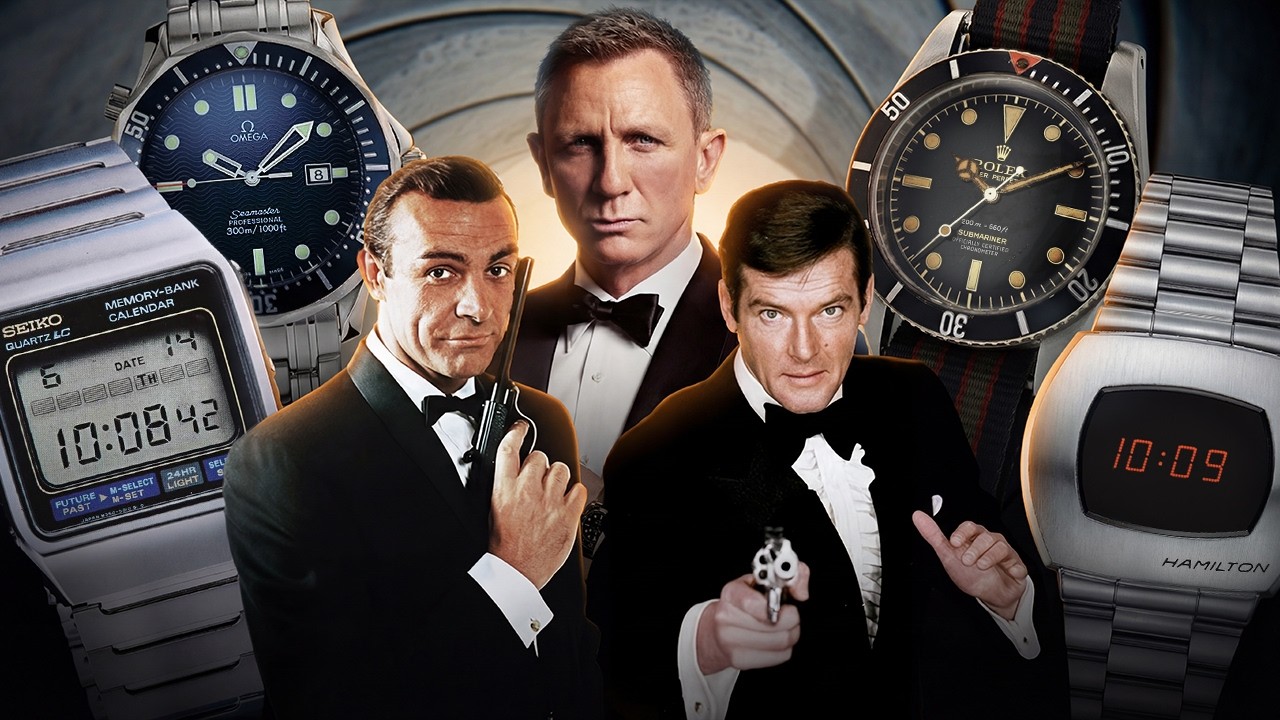
When Dr. No reached cinemas in 1962, the first watch audiences actually saw on Sean Connery’s wrist was a small gold dress piece, a Gruen Precision 510, worn in the casino scene where Bond utters his name for the first time. The watch was likely Connery’s own. The watch that became iconic came later in the same film: a Rolex Submariner reference 6538, most likely borrowed from producer Cubby Broccoli, visible on Connery’s wrist in the scene where Ursula Andress emerges from the surf. Goldfinger in 1964 gave that Submariner its definitive close-up, on a NATO strap in a dinner jacket, the image that cemented the model in watch culture. That film also put a Rolex GMT Master on the wrist of Honor Blackman’s character, a pilot, earning the model a nickname it still carries: the Galore watch.
Thunderbolt in 1965 introduced the Breitling Top Time, fitted on screen with a geiger counter to track stolen nuclear weapons. In reality it was an early-1960s chronograph aimed at motorsport enthusiasts, designed to feel youthful and tool-oriented. Bernardo was wearing a modern version of it during the entire conversation.
The Roger Moore years brought a different kind of tension to the wrist. The quartz crisis was reshaping the watch industry, and the Bond films moved with it. Live and Let Die in 1973 introduced the Hamilton Pulsar, the first LED digital watch, originally available only in gold and expensive enough to qualify as a luxury product. A later scene catches its red numerals glowing in the dark. Seiko followed across several Moore films, producing a ticker-tape message watch in The Spy Who Loved Me, a memory-bank calendar used as a remote detonator in Moonraker, the famous Golden Tuna dive watch built to withstand helium pressure in For Your Eyes Only, and the Seiko TV watch in Octopussy, which held the Guinness record for the smallest television screen ever made, roughly one and a quarter inches, and required a separate battery pack and antenna to function. As Bernardo put it: ‘He used it to leer at women on the tiny little screen. It feels weird just even saying.’
The Omega era opened with GoldenEye in 1995 and Pierce Brosnan. Costume designer Lindy Heming reasoned that a former naval officer would wear a dive watch, and Brosnan responded immediately to the Sea Master’s blue dial. That first model was a quartz reference 2541, equipped in the film with a laser and a remote detonator. By Tomorrow Never Dies, the watch industry was cycling back toward mechanical movements, and Bond followed: Brosnan wore the Sea Master reference 2531.80 with the caliber 1120 movement made exclusively for Omega.
Daniel Craig’s Casino Royale in 2006 made the brand relationship explicit. Eva Green’s Vesper Lynd glances at Craig’s wrist and says ‘nice watch, Rolex.’ Craig’s Bond corrects her: Omega. Craig wore two Sea Master variants across that film, using the Planet Ocean 600-meter reference in outdoor action sequences and the blue-dialed Sea Master in more formal scenes, a formula that held across Quantum of Solace and Skyfall. Spectre in 2015 brought the Sea Master 300 onto Bond’s wrist for the first time, a broader-arrow-handed, vintage-looking piece worn on a NATO strap, almost certainly a deliberate nod to the Goldfinger close-up of Connery’s Submariner on the same style of strap six decades earlier.
For No Time to Die, Craig visited Omega’s factory in Switzerland and contributed directly to the design of a titanium Sea Master Diver 300 carrying British military markings. The watch went on sale before the film was released, a consequence of production delays, meaning it was possible in 2020 to own the Bond watch from a Bond film that had not yet come out.
The one appearance that almost nobody remembers
George Lazenby’s single film, On Her Majesty’s Secret Service in 1969, contains what is believed to be the only Rolex Daytona, technically a pre-Daytona given its vintage, ever worn on screen in a Bond film. Lazenby had reportedly bought his own Rolex Submariner before his audition specifically to look the part, and wore it in the film alongside the chronograph that quietly made a piece of history.
Six decades of wristwear later, the Omega Sea Master 300 from No Time to Die is still in production in a 007 edition that carries no garish movie branding, just a titanium case, British military markings, and a connection to the most recent chapter of the franchise.