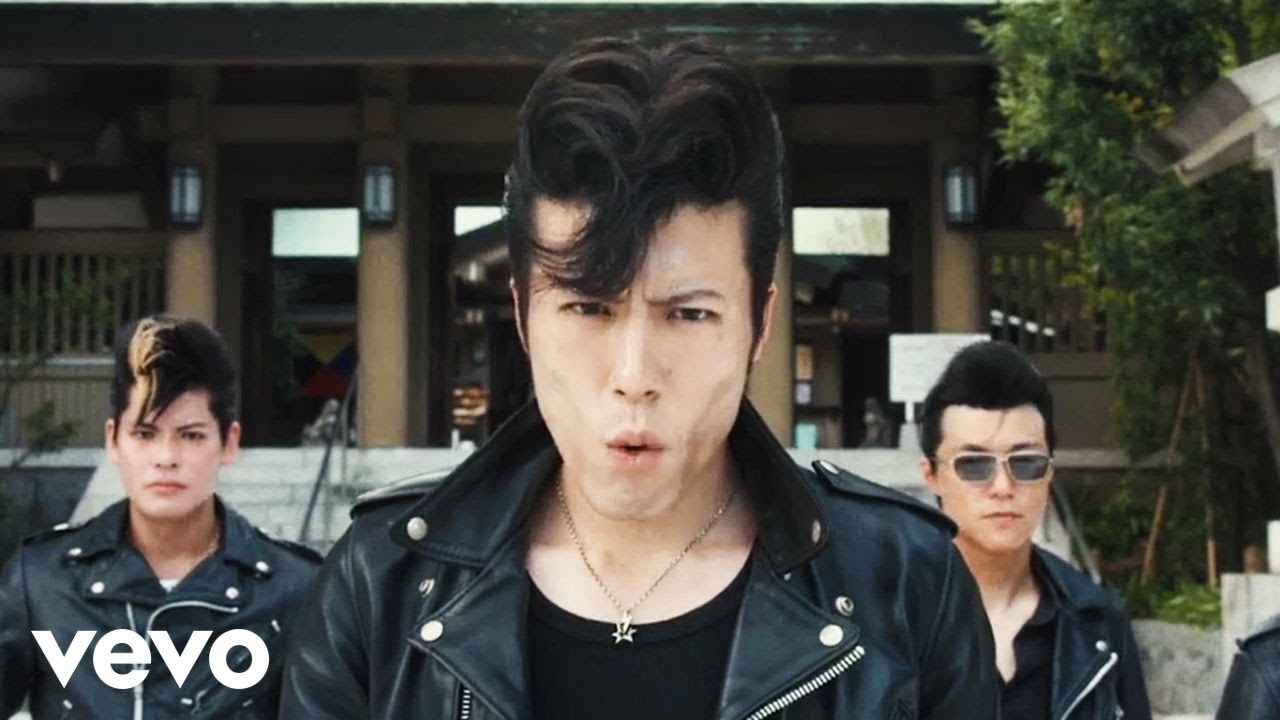
5 Seconds of Summer opens ‘Youngblood’ not with a power chord or a close-up, but with birdsong and distant traffic bleeding through a Japanese city at rest. It is a deliberately quiet entry point for a song about emotional whiplash, and the contrast works exactly as intended. The track captures something most people have felt and few have named cleanly: the exhausting loop of wanting someone to stay and pushing them away at the same time. That tension is the whole engine of the song, and the Tokyo setting gives it a particular kind of loneliness.
The push-pull that gives the song its shape
The lyric that does the most structural work is deceptively plain: ‘You push and you push and I’m pulling away / I give and I give and I give and you take.’ It repeats across the song not as laziness but as accumulation, the way a real argument replays itself until both people are too tired to find new words. The chorus doubles the contradiction by flipping the demand: in one breath, ‘say you want me out of your life,’ and in the next, ‘say you want me back in your life.’ The dead man walking and the dead man crawling are the same person, separated only by which version of the ending they are bracing for.
The Tokyo backdrop, introduced by Japanese conversation and city noise before a single lyric lands, frames the song as something happening in a specific, slightly foreign place. It is a classic isolation device: a crowded city where nobody around you knows what you are going through. 5 Seconds of Summer have said in interviews that ‘Youngblood’ marked a deliberate shift in their sound toward something leaner and more emotionally direct, and the production here reflects that. There are no ornamental layers buying goodwill; the spaces between the vocal phrases stay open.
What the second verse adds that the chorus alone cannot
The second verse earns its place by getting specific in a way the chorus cannot afford to be. ‘Lately our conversations end like it’s the last goodbye / Yeah, one of us gets too drunk and calls about a hundred times.’ That line is the emotional proof of concept for everything the chorus is arguing in the abstract. The detail of the late-night call, the drinking, the person staring at strangers hoping to see a familiar face: those are the human coordinates that make the larger feeling legible.
The song does not resolve. The final sequence circles back to the same lyrical phrase, ‘pulling away from you,’ without offering a verdict. That is the point. Some situations do not close cleanly, and ‘Youngblood’ is honest enough to let that stand.
The opening that the song keeps returning to
Birdsong and distant traffic, the two sounds that open the track, reappear in the final moments. They were there before the argument started, and they are still there after it trails off.
The city noise does not comment on what just happened. It just continues, the way cities do, indifferent and ongoing, while somewhere inside it a voice is still deciding whether to walk or crawl.