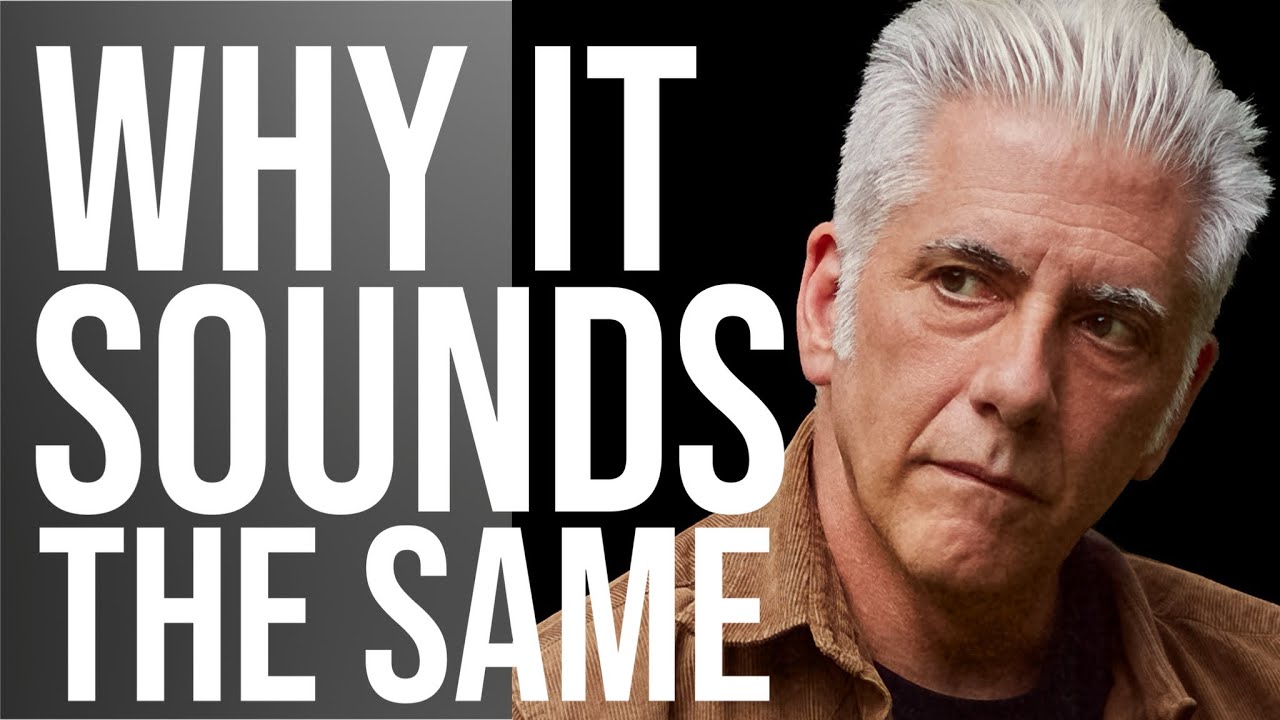
Rick Beato was scrolling through a text from his friend Rich when a YouTube video stopped him cold. The clip, made by a creator named Carl E. Martin, had stitched together a string of contemporary pop hits to argue they all shared the same repeating melodic phrase, something Martin called the Gen Alpha Melody. Beato recognized it immediately, and not because of anything recent.
The reason that melody felt so familiar had nothing to do with TikTok. It had everything to do with a John Lennon song from 1965, and understanding why that matters requires a short trip into what actually makes a melody interesting in the first place.
What Martin got right, and what he left out
Martin’s comparison worked by isolating vocals from dozens of current songs, transposing them all into the key of E-flat, and laying them over a single repeating chord progression: four chord, five chord, one chord, six chord, cycling on a loop. Heard that way, the melodic similarity across tracks is genuinely striking. But Beato pointed out a meaningful gap in the framing. The original songs are in different keys and, more importantly, use different chord progressions underneath that shared melodic shape. That distinction matters because, as Beato put it, ‘harmony is the ocean that melody sets sail upon.’ Strip away the harmonic context and you lose the relationship between the two, which is where the real character of a song lives.
The melody Martin isolated is what musicians call diatonic: every note sits inside the same key, with no outside colors introduced. That is precisely why, stacked together, all those contemporary songs blur into one undifferentiated phrase. The notes never surprise the ear because the chords never take the harmony anywhere unexpected.
Lennon’s version of that same melodic contour, on ‘It’s Only Love’ from the Beatles album ‘Help!’ released in 1965, moves through a progression that includes a flat seven chord borrowed from outside the home key. That single harmonic detour changes everything. Beato demonstrated the moment at the keyboard: when the chord shifts from the flat seven to the one, the melody suddenly has tension and release that the diatonic version simply cannot generate. ‘It’s amazing how those people recycled this John Lennon melody,’ Beato said, ‘but the one thing they missed out on is that John did it over a different progression that’s way more interesting than any of these songs.’
850 million plays and a chord progression built on borrowed chords
To demonstrate that harmonic complexity is not the enemy of commercial success, Beato brought in a second example: Nirvana‘s ‘Come as You Are,’ which at the time of the comparison had 850 million plays on Spotify. That song’s progression borrows chords from multiple keys, including a flat six major and a flat seven major, while Kurt Cobain‘s vocal melody threads chromatic notes through each shift. Heard in isolation those notes sound jarring. Inside the song they feel inevitable. The tension created by notes landing against borrowed chords is exactly what gives the song its emotional pull, and it is entirely absent from the contemporary tracks Martin compiled.
The point is not that modern pop songwriters are lazy. It is that the current production ecosystem rewards a specific melodic shape while largely decoupling it from the harmonic movement that originally made that shape resonate.
A wall of John Lennon memorabilia, and one low-key acknowledgment
Beato made the case from a room lined with Beatles memorabilia, Lennon photographs visible behind him throughout. He noted that Martin’s own video does acknowledge the Beatles connection, though only in the final two seconds, with Martin describing them as ‘an obscure Scouse band who used it, but they probably didn’t influence anybody.’
The full chord chart for Lennon’s original progression sits somewhere in the gap between that dry joke and the 60 years of songs that followed it.
Words are not sufficient for explaining or describing The Beatles, and how they helped make the World A Better Place –
John Lennon | Paul McCartney | George Harrison | Ringo Starr
But ALWAYS remind yourself to Imagine, Believe, Achieve … And don’t forget the lessons of Yesterday 🙂
Yesterday is important, so Let it Be 😉
Hey Jude, remember Elanor Rigby is a lesson to never forget, and also critically essential that While My Guitar Gently Weeps we remember all of the whys In My Life every Now and Then … 😉 ✌️☮️❤️ Don’t miss Ringo Starr on The Beatles Secret to Success and The Beatles Final Rooftop Performance!
And WHEN you are occasionally down, don’t worry, Tomorrow is Another Day and…