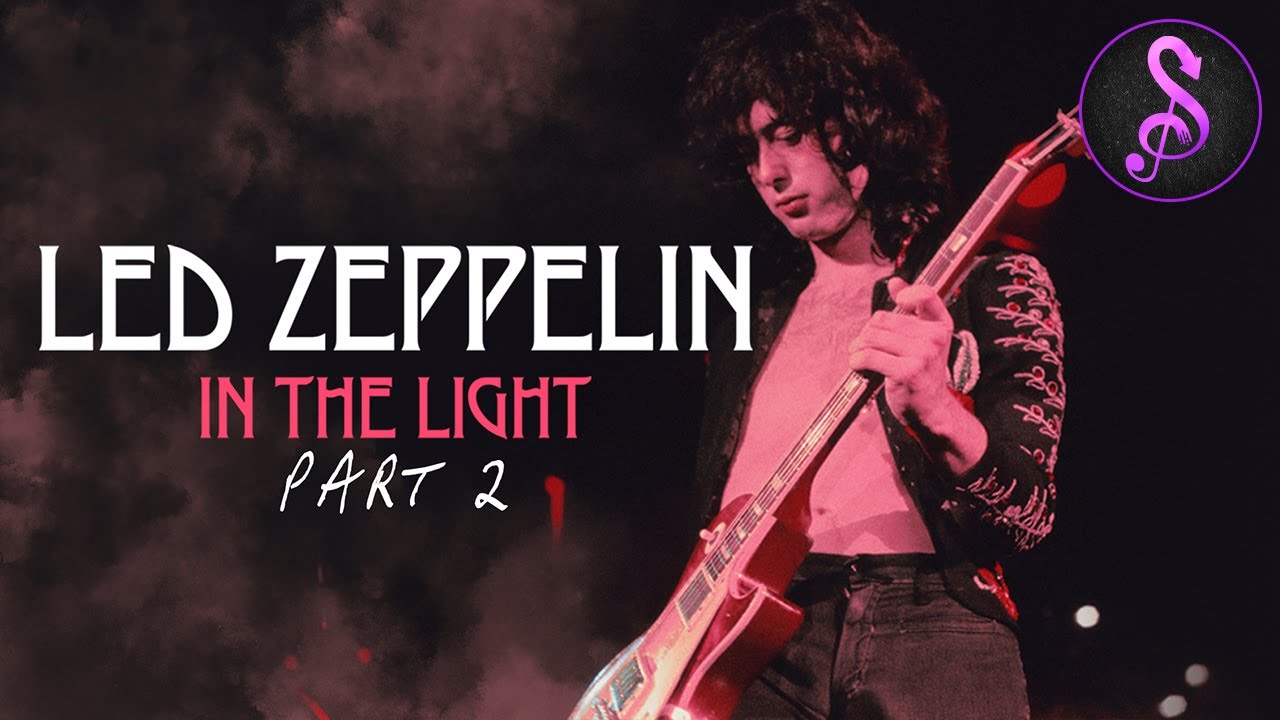
John Bonham’s left foot never stopped. While his right foot drove the thunderous kick pattern through ‘Whole Lotta Love’, his high-hat kept ticking in 16th notes underneath, a technically brutal independence that most drummers cannot sustain, and that almost nobody noticed. That quiet discipline inside the loudest band on the planet is exactly what made Led Zeppelin impossible to replicate. Across a career that reshaped what rock music could be, the four men who made up Zeppelin drew from blues, folk, Viking mythology, and raw sexual energy, and somehow forged a sound that still has no real successor.
Two chords and a calling card
By the time Led Zeppelin played a groundbreaking appearance before 200,000 fans at a festival in Somerset, near Bath, with the sun setting behind the stage, America was already under their spell. The UK needed catching up, and that single show did it. The band had arrived at the moment fully formed, armed with a second album that opened with what one contributor to the documentary called ‘the riff that ate the world.’
‘Whole Lotta Love’ runs on two chords, E and D, nothing more. Jimmy Page’s genius was not harmonic complexity but the deceptive simplicity of a riff so elemental it became a greeting, a declaration, a dare. As one voice in the film put it plainly: ‘It’s like, hey, we’re here.’ The midsection, that long, sexually charged suspension where Plant’s voice hovers over Bonham’s held rhythm before Page’s solo tears back in, was described as ‘the blueprint for serious, no messing around rock and roll.’ Page himself explained his production philosophy in terms that made the studio sound almost biological: he was chasing raw emotion and sensitiveness, and he believed that if a take was not working after repeated attempts, the right call was to move on and return the next day.
Wales, acoustic guitars, and the critics’ backlash
After relentless touring behind the first two albums, the band retreated to a cottage in the Welsh mountains with no electricity and no telephone, looking to reset. The result was the third album, deliberately quieter, full of acoustic tracks that fans and press did not know what to do with. Plant later recalled the critical response with something close to satisfaction: ‘With the critics screaming for our lives and blood, saying what’s this crap, it was probably one of our finest moments.’
The acoustic space revealed things the heavy material had not. ‘That’s the Way’ offered a pastoral stillness that contrasted sharply with ‘Immigrant Song’, the album’s opening track, which Page built around an octave riff in F sharp that one observer said ‘must have scared the hell out of the clergy.’ Plant’s lyrics for ‘Immigrant Song’ came directly from a stop the band made in Iceland on the way to an American tour, the Viking imagery arriving almost geographically.
Throughout all of it, John Paul Jones held a role that the documentary insists has been consistently underestimated. He played Hammond organ on ‘Since I’ve Been Loving You’, laying down what was described as ‘huge slabs of organ sound’ behind Page’s blues solo, and his ear for arrangement shaped songs across every album. His string work, including later collaborations with other artists, was called ‘always unexpected’, which the film suggests is the most accurate summary of Zeppelin as a whole.
The Carnegie Hall night nobody expected
One witness to the New York period described arriving at Carnegie Hall, the first time a rock band had ever played there, to find every ticket gone. With no seats available, he stood at the side of the stage for what he called one of the best shows he had ever seen the band perform, including shows later in their career. The New York audience leaped from their seats and screamed. Back in London, he noted, crowds would stand holding a pint of beer, ‘going, uh, impress us.’
The contrast captures something real about why Zeppelin became what they became. They did not release singles. They did not appear on television. You bought the record, and then you went to the show, and the show was never the same thing twice. Live, ‘Heartbreaker’ could stretch to ten or fifteen minutes. The band, one voice said, had a ‘magical ability to merge structured songs around unstructured improvisations, and seamlessly blend the two together’, something no other rock band on the planet had come close to matching.
The high-hat that kept going
Bonham’s left foot, still ticking on that high-hat.
Long after the studio version of ‘Whole Lotta Love’ had finished, long after the tour buses had moved on, the technical detail that nobody in the crowd consciously registered was the thing that held the whole architecture together. The groove was not just feel. It was discipline dressed up as abandon.
The fourth album, the one that followed the Welsh retreat and the critical backlash, was described simply as a total blockbuster. Heavy metal, it was said plainly, would not have existed without them.