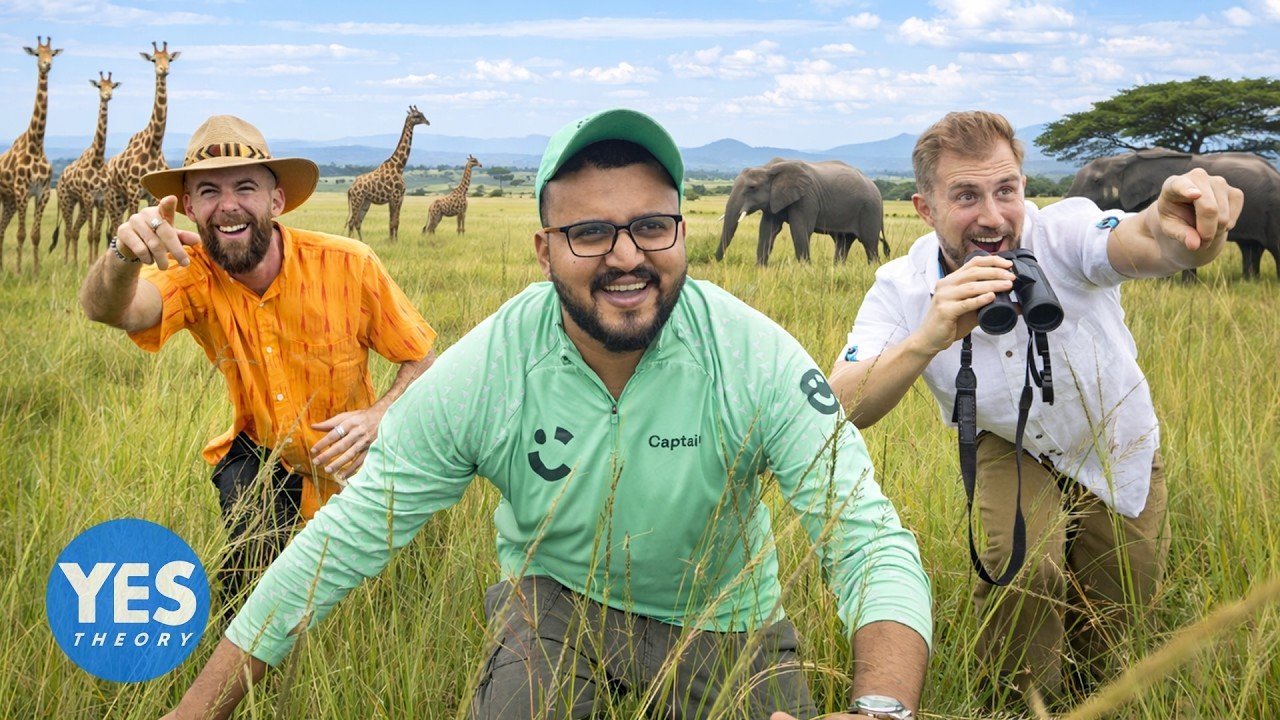
The coconut water arrived at 10:00 p.m. The man who brought it had been riding delivery routes across Dubai for four years without a single trip home to Pakistan, without a vacation, without ever leaving those two countries in his entire life. His name was Vakar. Within an hour of that delivery, he was sitting inside an apartment being told that strangers wanted to take him somewhere in the world – destination to be revealed later. He said yes.
The setup was straightforward: order food delivery repeatedly until someone said yes to an impromptu adventure. Several drivers came and went, some with no English, some simply unavailable. Vakar arrived on a night delivery, wearing a hat, answering questions carefully. He had two younger brothers back in Pakistan – one eleven years old, one eighteen. He hadn’t seen them in four years. He sent money home to his mother. Asked where he wanted to travel, he didn’t have a ready answer. His exact words: ‘My dream is not a big dream because I work bike rider.’
Nairobi to the Masai Mara Aboard a Four-Seat Private Plane
The destination was Kenya. Specifically, Angama Mara – a five-star lodge perched on the edge of the Great Rift Valley overlooking the Masai Mara. Getting there required a Nairobi landing first, followed by a six-plus-hour overland drive, or the alternative the group chose: a private charter flight directly into the Mara. Vakar’s seat could rotate a full 360 degrees to face the windows. He asked for a massage. The plane had one.
Getting to that plane, however, was not straightforward. At Dubai International, Vakar was pulled into a separate security queue. His employer – apparently unaware of or hostile to the situation – demanded a $2,000 USD payment before releasing him to travel. The gate was closing. Stefan negotiated with an immigration official while the rest of the group ran ahead to hold the departure. A golf cart was commandeered. The gate had technically closed by the time Vakar cleared the final corridor. The airline held it. He boarded.
Vakar’s brother, who had been planned as a surprise addition to the trip with visa approved and flights booked, was denied exit from Lahore’s airport despite having all documentation in order. Pakistan holds one of the weakest passports in the world for international travel, and the denial was a blunt demonstration of what that means in practice. The brother never made it to Kenya. The group absorbed the news at the hotel in Nairobi that first night and moved forward.
Angama Mara had been briefed on the purpose of the trip and sponsored the three-night stay. The lodge is unfenced – no barriers between the tented rooms and the surrounding wildlife corridor. Buffaloes used the grounds as a mud bath. Lions had recently taken down a zebra near the perimeter. The staff told Vakar not to walk outside alone after dark. He admitted he had already been doing exactly that, at 1:00 a.m. and again at 4:00 a.m.
First Rhino Sighting on the Road Out of Angama Mara
Guide Ken led the group out of the lodge compound – still technically inside the property, because there is no fence – and within minutes a white rhino appeared in the grass. Ken noted that most visitors never see one. The group sat in silence. From there the drives produced hippo fights along a river crowded with crocodiles, herds of zebras moving in waves across the plain, giraffes in open savanna, warthogs, crowned cranes, hyenas, topi, and elephants. Every animal Vakar had listed in Dubai – lion, hippo, rhino – appeared.
On the final morning of the safari, the group was woken before dawn for a hot air balloon ride over the Mara at sunrise. Vakar had mentioned watching balloon videos online for years. He was afraid of heights. He went anyway. The flight ended with a full bush breakfast set up in the open grass.
The lions came on the last game drive. A male and female resting together in long grass, close enough to fill a camera frame without a zoom lens. Vakar went quiet. He described watching wildlife documentaries for years on his phone between deliveries. Standing a few meters from two wild lions in the Masai Mara was, by his own account, something he had never allowed himself to actually picture happening.
That evening, local Maasai performed a cultural ceremony at the lodge – a closing ritual that none of the group had been told to expect. The next morning, Vakar was told he was being given a flight to Pakistan to see his family, plus a return ticket to Dubai. Four years since he had seen his mother and brothers. The announcement was made sitting in the grass with the Mara behind them.
What Vakar’s Four Years in Dubai Reveal About How Safari Travel Gets Distributed
The Masai Mara sits within reach of Dubai – roughly five hours by air. Hundreds of thousands of people pass through Dubai’s airport monthly, many of them migrant workers on employment contracts that restrict travel, absorb wages in employer-held fees, and make spontaneous exit nearly impossible. The $2,000 fee demanded at immigration to release Vakar was not exceptional – it reflected a documented pattern. The distance between riding delivery circuits in 45-degree summer heat and watching lions in the Mara is not primarily geographic. It is structural.
Back at the Nairobi departure gate, a gate agent had held the door open against protocol and waved the group through. At Angama Mara, staff had written a welcome letter. Ken the guide had spent two days pointing out animals by name and moving slowly so everyone could see. The trip worked in pieces because individual people inside systems made small decisions to extend it. Vakar’s first vacation ended not with a flight home to Pakistan, which was still ahead of him, but with a Maasai dance under open African sky and a handshake from a guide who had watched him see his first lion.
 Wake up to Only Happy News!