A blue whale’s tail breaks the surface just under a small boat. David Attenborough, watching from above, narrates in real time: ‘I can see its tail just under my boat here. And it’s coming up, it’s coming up. There.’ For a naturalist who once believed the great whales were gone for good, the moment carried the full weight of nearly a century of ocean observation.
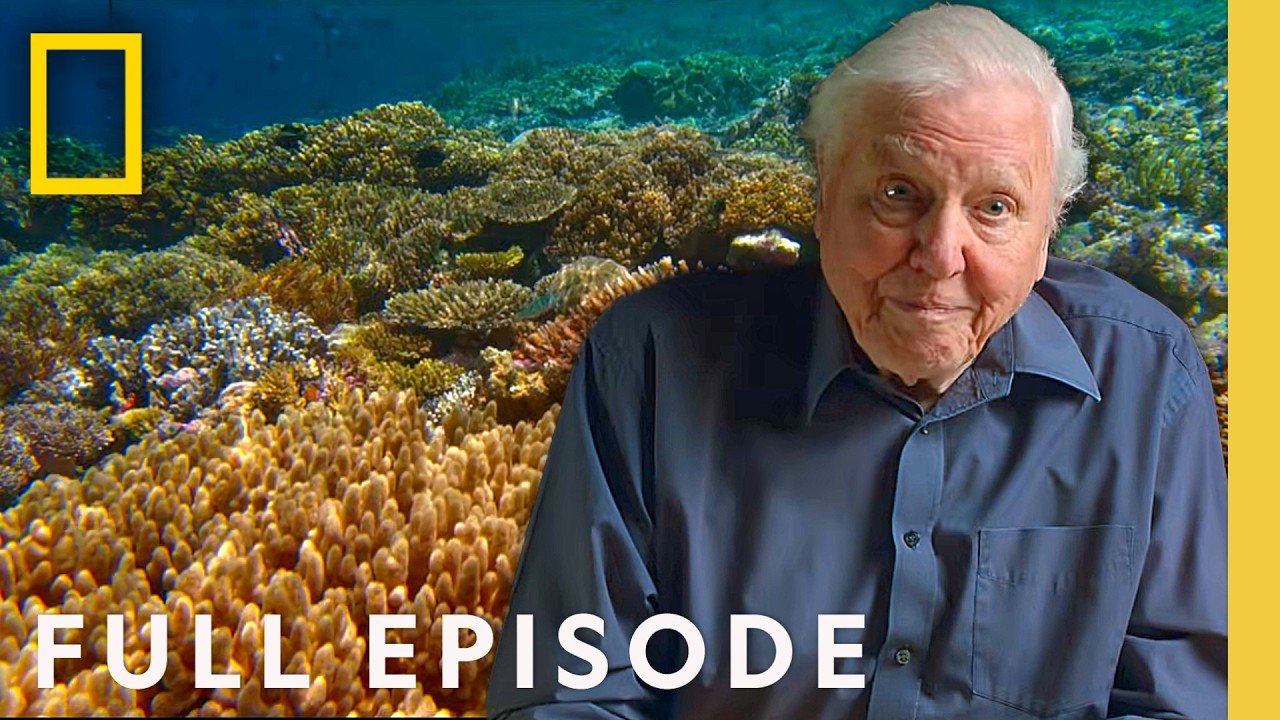
Attenborough has spent close to 100 years on this planet, and his central conclusion from that lifetime is direct: the most important place on Earth is not on land, but at sea. The documentary ‘Ocean with David Attenborough,’ produced by National Geographic as a World Ocean Day special, lays out both the scale of damage done to marine ecosystems and the speed at which those ecosystems can repair themselves when given the chance.
What the ocean actually does for the air we breathe and the food we eat
The film moves quickly from wonder to function. Ocean phytoplankton, single-celled plants that flourish in coastal shelf waters, remove almost a third of human carbon emissions, according to findings presented in the documentary. More striking still, they produce more oxygen than all the trees on Earth combined. Attenborough frames this plainly: that is half of the air we breathe. Zooplankton, the animals that feed on phytoplankton, are described as the most abundant animals on Earth and the base of almost every food chain in the sea.
Below the surface of familiar coastlines, kelp forests border a quarter of the world’s coasts. Giant kelp is described as the tallest living thing in the ocean. Scientists, according to the film, had no prior idea of the scale of these forests or the speed at which they grew. And only within the last couple of years before filming, researchers found the world’s largest seagrass meadow, which increased the global estimate of that habitat by nearly half. Ocean jungles and meadows, the documentary states, absorb far more carbon than the same area of rainforest on land.
Out in the open ocean, far from any coast, the picture has also shifted. The high seas were long assumed to be a largely empty desert. New tracking data has changed that. Sharks and tuna have been tracked making enormous migrations across entire ocean basins, steering along specific currents toward gathering points called seamounts. These submarine mountains soar up to three miles high and cause deep, nutrient-rich water to rise to the surface. The documentary reports that researchers have now identified nearly twice as many seamounts as previously thought, with approximately 40,000 across the sea floor.
The diver who swam from the Garden of Eden to a nuclear winter in one dive
Don MacNeish, a scallop diver from a Scottish island community with more than 5,000 years of recorded reliance on the surrounding sea, describes what industrial dredging looks like from below. ‘When I used to go scallop diving, you would dive down to the sea bed and just acclimatize yourself,’ he says. ‘Things that look like plants down there are animals, and they’ve been there for millions of years. Slowly but surely, you would see a complete bed of scallops. It’s ancient, can take 100 years to grow.’ Then a dredger passed. ‘The first time that I dived over an area that a scallop dredger had just been over, it was just heartbreaking. All sorts of animals just smashed to pieces. It was like swimming over the Garden of Eden to a nuclear winter.’
The documentary identifies bottom trawling as the primary industrial force behind this destruction. A modern industrial bottom trawler uses a chain or metal beam to force sea floor life into a net, smashing across the seabed and destroying nearly everything in its path while often targeting just a single species. Over three-quarters of a trawler’s catch may be thrown away. An area almost the size of the entire Amazon rainforest is trawled every year, and much of that seabed is plowed multiple times over. The churning of sediment releases vast amounts of carbon dioxide. The trawlers’ trails of destruction are visible from space.
Bottom trawling remains legal in many Marine Protected Areas worldwide. Governments currently spend $20 billion per year subsidizing overfishing on an industrial scale, according to the film. Around 400,000 industrial vessels now operate in every corner of the ocean. Two-thirds of all large predatory fish have already been killed. Lines of baited hooks 50 miles long reel in millions of sharks every year. Sharks and turtles, the documentary notes, survived the extinction of the dinosaurs but may not outlive the current era of industrial fishing.
John Adams, a fisherman whose community depends on the ocean for food, school fees, and family survival, describes the change in plain terms. ‘Our nets used to be full,’ he says. ‘The bigger size are gone. They are no more. Even the smallest, the smallest ones, we are after them because there’s no fish. These days, when I throw, I catch plastic.’ Three billion people rely on the ocean for food, according to the documentary, yet ships sent by a few wealthy nations are removing the food source that coastal communities have relied on for millennia.
In Antarctica, the crisis extends to krill, the small red crustacean that underpins the entire Southern Ocean food web for whales, fish, and penguins. Industrial trawlers now operate in Antarctic waters, sucking hundreds of thousands of tonnes of krill into vast nets to be processed on board for fish farms, health supplements, and pet food.
A no-take zone that started producing record lobster traps within five years
The documentary’s turn toward recovery is anchored by specific, measurable outcomes. An area of nearly 300 square miles, fished intensively for over 200 years, was declared a no-take zone. Predators returned. Balance was restored. In just five years, kelp forests were flourishing again. Spiny lobsters, able to grow larger without fishing pressure, released more eggs. Their larvae traveled for thousands of miles, crossing international borders, and settled outside the protected zone, reviving fisheries far beyond its boundaries.
Ray Kennedy, a fisherman who worked the edge of the reserve, described a single day that shifted his view of marine protection. ‘On one particular day, fishing on the edge of the reserve, we pulled up the trap of my career. The most I’d ever seen in a trap. One for the record books right there. It was an ecstatic moment, and it was an eye-opening moment. I think every fisherman I know will acknowledge the fact that the reserves are working.’ Giant black sea bass, once assumed lost forever, returned to the kelp fronds.
The same pattern emerged in the Mediterranean, where fish populations have almost completely collapsed and a third have already been lost. A tiny reserve established off the coast of France erupted back to life, with the largest fish making a comeback. This was the result of fully protecting less than 1% of the Mediterranean.
Papahanaumokuakea, in the Pacific, offers the largest example. The marine protected area, which is the largest fully protected area of land or sea on the planet, grew from calls by native Hawaiian fishermen and elders. Aulani Wilhelm, who worked on its protection, credits that indigenous vision directly. ‘Without it, there would be no moli, no Laysan albatross,’ she says. Moli are described in the documentary as the longest living known species of bird on the planet. Thanks to the protections at Papahanaumokuakea, they have gone from near extinction to the largest albatross colony in the world, with 14 million seabirds now returning each year. Tuna populations in neighboring areas have increased by 54%, according to findings cited in the film.
Coral reefs face a harder road. During filming, ocean temperatures rose higher than ever before, triggering the biggest global mass bleaching event in recorded history. Nearly all coral reefs are predicted to disappear within the next 30 years if warming continues. But in a few places where strict protection from fishing has allowed grazing animals to thrive, those grazers hold back the smothering algae, giving bleached corals a chance to recover. Baby corals have been documented emerging from damaged reefs. Entire reefs, in some locations, have come back to life. The documentary identifies these as the most resilient reefs on the planet, and attributes that resilience directly to fishing protection.
Less than 3% of the ocean is currently fully protected, according to the film. In practical terms, Attenborough says, it is none of it, because many Marine Protected Areas that do exist still allow destructive fishing. Scientists have stated that at least a third must be fully protected to prevent collapse. Nearly every country on Earth has agreed, on paper, to achieve that threshold.
The moli chick sitting on a tiny spit of land in the Pacific
On a low strip of land inside Papahanaumokuakea, a Laysan albatross chick sits in its nest. Aulani Wilhelm watches it and says, ‘It’s hard not to look at this moli chick and wonder, what will it see in the next 60 years?’ The chick’s parents have spent years developing their own pair bond through a shared dance, reaffirming their connection each season. The chick does not yet know the entirety of the vast Pacific Ocean it will eventually navigate.
The same blue whale whose tail Attenborough watched rise from beneath his boat could, if born today, live for over 100 years. Its species was hunted to 1% of its population before commercial whaling was banned. In just over a decade after the ban, humpback whale numbers in the South Atlantic tripled. Fin whales returned to Antarctica in scenes that would have been unimaginable 50 years earlier. The blue whale itself has begun to return. Attenborough says he would never have imagined encountering one himself after the years he spent believing they were gone for good. He did encounter one. Its tail rose toward his boat in open water.
Source: Watch original
This article was reported in June 2026.
OHN Editorial Note: This article is based on publicly available sources. If you spot an error or have updated information, contact us at editorial@onlyhappynews.com. We correct mistakes promptly.