Sixty years ago, the coal mines of Lusatia made the air so dirty that people did not dare to hang their laundry outside. Today, more than twenty lakes sit where those mines once scarred the earth, ringed by white sand beaches and forests, forming Europe’s largest artificial lake district. That transformation, decades in the making, is exactly the kind of story the world rarely stops to notice. November 2026 delivered a full month’s worth of them, from a tiny pill that finally treats the root cause of narcolepsy to white rhinos helping prevent wildfires in Mozambique.
The solar milestone that crept up on everyone
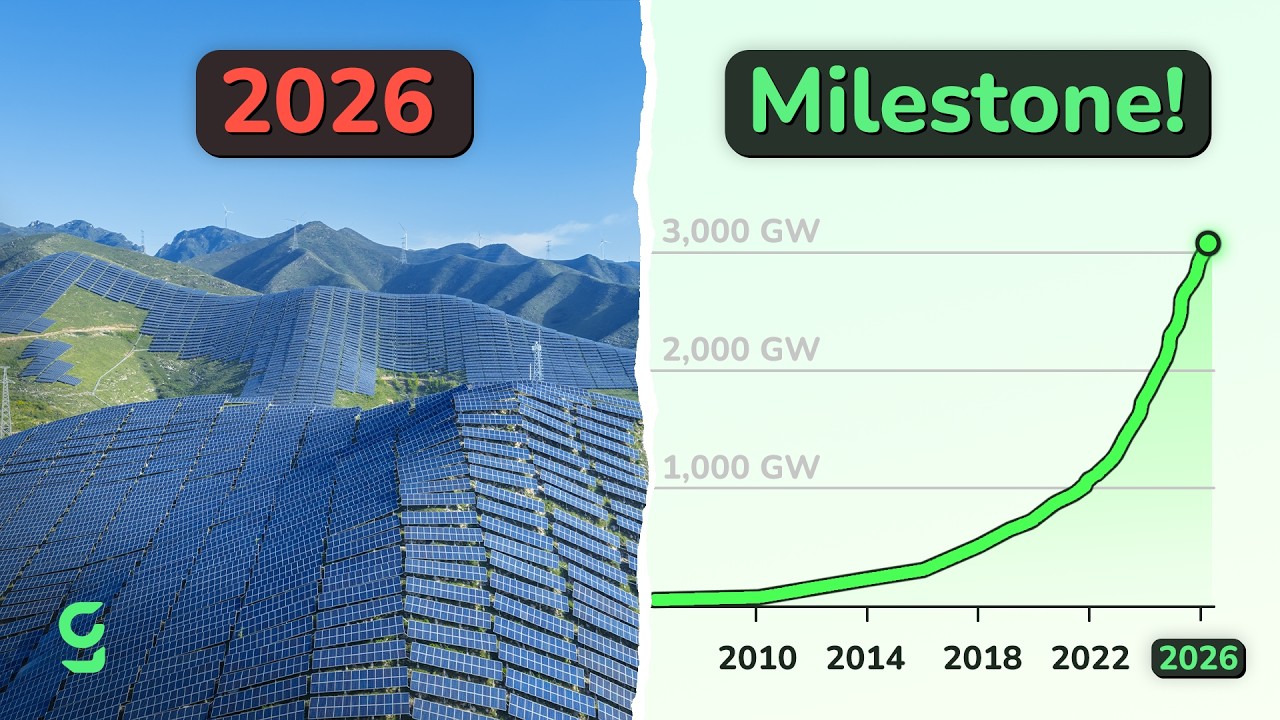
The modern solar cell was invented in 1954. It took 68 years for global installed capacity to reach 1 terawatt. Doubling that took just two more years. And this year, the world crossed 3 terawatts of installed solar capacity, enough to supply roughly 9% of global electricity demand. Solar no longer sits in the niche column. Alongside wind, hydro, and nuclear, clean energy now accounts for more than 40% of global production, and last year, renewables generated more electricity worldwide than coal did for the first time ever. Industry experts now forecast the world will more than double current capacity by 2030, as expansion moves beyond China into emerging markets including India and Brazil.
The land-use picture is shifting too. According to a global report, land-use emissions have fallen by around 32% since the 2000s, driven in part by less permanent forest clearance and large-scale reforestation. Between 2015 and 2024, forest regrowth removed enough CO2 to offset roughly two-thirds of global deforestation emissions. China’s land-use sector has even dropped below zero net emissions, meaning it now absorbs more carbon than it releases, the first time that has happened since records began in 1850.
Rhinos, orangutans, and a reserve bigger than Texas
In Mozambique, nine female white rhinos were introduced to a National Park, joining a population of around thirty others. The reintroduction matters beyond the headline numbers. White rhinos graze constantly, keeping grass from growing tall enough to ignite during the dry season. Decades of colonial-era hunting and a civil war that lasted from 1977 to 1992 wiped the animals out twice over, and the ecosystem changed without them.
On the Indonesian island of Sumatra, a Nature Reserve operating since 2011 now shelters more than two hundred critically endangered Sumatran orangutans, with at least ten births recorded, an encouraging sign the population is becoming self-sustaining. In Argentina’s wetlands, over 110 orphaned giant anteaters have been rescued and released since 2007, and the population is breeding and growing steadily.
The furthest reach of the month belonged to Easter Island, known locally as Rapa Nui. The Marine Protected Area surrounding the island covers more than 700,000 square kilometres of the Pacific, larger than the state of Texas, and is home to at least 140 species found nowhere else on Earth. After securing international funding, the reserve will now pay for sea patrols and marine science while combining that research with centuries-old indigenous knowledge, including a tradition of closing certain fishing areas temporarily to let fish stocks recover.
As Freddy, the presenter who built the Good News channel alongside Luis starting in 2022, put it plainly about their motivation: ‘Every time we opened our phones, we felt a bit worse. But a lot was also going right. It just barely got any attention.’
In Uzbekistan, a quieter shift is registering in the data. In 2017, only 27% of young children attended preschool. By 2025, after thousands of facilities were built and repaired, that figure had climbed to 75%, meaning more than three million children aged three to seven are now getting an early education.
On the medical front, a pill that treats the root cause of narcolepsy type 1 received approval in the United States. Rather than managing symptoms, it mimics orexin, the chemical messenger the brain uses to regulate sleep and wakefulness. People with narcolepsy type 1 have lost the cells that produce it. In clinical trials, patients stayed awake more reliably during the day, experienced fewer sudden muscle weakness episodes, and slept better at night.
And above the North Atlantic, a project called Operation Blue Skies is using AI developed by Google to predict where warming contrails are most likely to form along one of the world’s busiest flight corridors. Air traffic controllers can then route planes a few hundred meters higher or lower to avoid those zones. Researchers estimate that roughly 5% of global contrail warming originates from that corridor, particularly in winter.
The lake district that opened just in time for summer
Lake Sedlitz, the fifth and final piece of a connected system of large lakes in Lusatia, opened this year just in time for summer. Five lakes, all linked by canals, now occupy land that a generation ago produced coal and choked the sky.
The twenty-plus lakes of Lusatia did not appear overnight. They arrived after decades of controlled flooding, slow forest return, and patient waiting, the kind of timeline that rarely makes headlines until the beach opens. Lake Sedlitz opened anyway, on schedule, ringed by water that was once a pit.
 Wake up to Only Happy News!