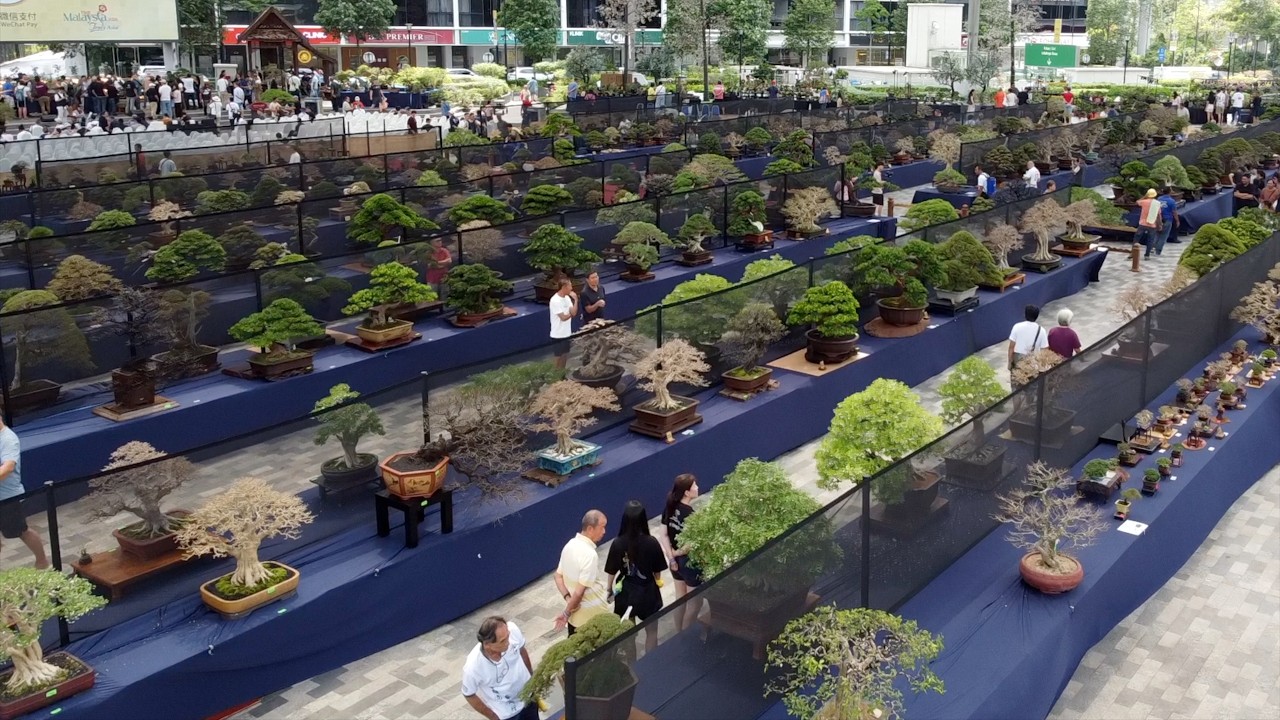
Kuala Lumpur hosted the 10th World Bonsai Convention, and the trees on the exhibition floor stopped at least one European visitor cold. For anyone who has spent years around maples, pines, and junipers, the sight of an unfamiliar tropical species shaped with the same exacting patience as a centuries-old Japanese pine raises an immediate question: how much of what we think we know about bonsai is actually just geography? The answer, on display across the ceramic pots and handcrafted tables of this Malaysian showcase, turns out to be more than expected.
Trees that rewrote the familiar checklist
The convention drew visitors from across the world, but the bonsai on display were almost entirely Malaysian. That distinction mattered. The species filling the room were not the ones that dominate most bonsai literature: Premna, Wrightia, and other tropical varieties that thrive in a climate where frost is never a variable. One particular tree stopped the Bonsai Empire presenter outright. From a distance it read as a juniper, the fine branching, the dense canopy, the sense of age compressed into a compact silhouette. Up close it was a tropical species entirely, and one he described as a tree he is ‘very keen on.’
What struck him most was not novelty for its own sake but craft. The level of refinement in the fine ramification across the collection was, by his own account, ‘incredibly high.’ Malaysian growers have channelled their attention into the trees themselves rather than the surrounding presentation. The pots and tables are considered, but the tree is the argument, and the trees here made a strong one.
What a tropical bonsai scene looks like from the outside
For a grower arriving from Europe, the convention offered something genuinely disorienting in the best sense. The species were unfamiliar. The climate logic behind their cultivation was different. Yet the discipline, the patience with branching structure, the commitment to material over decoration, was instantly recognizable. The Malaysian bonsai community has built something that does not merely adapt the tradition to a tropical setting; it extends it into territory the conventional canon rarely reaches.
The ceramic displays numbered 153 pieces in total, each tree selected to represent a scene that is still largely unknown to the wider international bonsai world. That number alone is a useful measure of how organized and serious the local community has become.
One tree still waiting for a name
One tropical specimen near the center of the floor carried the silhouette of something ancient, its canopy finely divided in a way that took real years to produce. The species went unnamed in the moment, the kind of tree that makes an expert slow down and admit they are looking at something they have not fully catalogued yet.
The 10th World Bonsai Convention in Kuala Lumpur offered what the first view of that near-juniper promised: a tradition practiced on different soil, with different trees, shaped by the same long patience, and arriving at something that looks, from almost any angle, exactly right.
 Wake up to Only Happy News!