The Forgotten Islands of Indonesia ask nothing of the diver who descends into their waters except patience. Wait long enough and a broadclub cuttlefish will dissolve itself into the coral beside you, its chromatophores firing in real time until the animal is simply gone. This is the Coral Triangle, a 6-million-square-kilometer arc of ocean where the seas of Southeast Asia and Oceania meet and where 75% of all the planet’s coral still lives. It is also, according to the scientists and filmmakers who spent two years and more than 300 hours underwater documenting it, one of the last places on Earth where a reef still functions the way reefs are supposed to.
A reef that runs on competition, camouflage, and cooperation
As evening falls over the Banda Sea, the reef shifts gear. A tiny pygmy squid, barely 2 cm long, locks its grip on a strand of coral to hold itself against the current. Nearby, a male broadclub cuttlefish ripples its lateral fins in a mating display for a golden cuttlefish, recognizable by her blue line, before a rival male crashes the ceremony and the two launch into a full-on brawl. The loser retreats. The winner inseminates the female and, because males can only do so once, that is the end of his story too.
The female’s story runs a little longer. She searches the coral’s hidden cavities for the right place to deposit her eggs, then expels tens of thousands of them in a single effort. Weeks later, a new generation of broadclub cuttlefish will hatch into the same reef. She will not be there to see it.
Life reassembles around that absence almost immediately. A shoal of young convict blennies breaks into coordinated formation, thousands of tiny fish moving as a single shape-shifting body to confuse predators. The area around Manok Island holds additional hazards: banded sea snakes up to three and a half meters long probe the coral walls for eggs and small crustaceans, while a separate China sea snake, carrying venom ten times more lethal than a common cobra’s, hunts by lying in wait and exploiting the work of other fish. It surfaces at least once every six hours to absorb oxygen through its skin.
The creatures nobody expects to find this deep
In the narrower corridors of the reef, the purple scorpion fish sits motionless on the seabed. It measures up to 23 cm, changes its skin color to shed parasites, and is covered in spines sharp enough to make camouflage almost redundant. Nearby, the Spanish dancer nudibranch, the only nudibranch species that can reach 45 cm, moves through the dark feeding on sponges, while the solar-powered nudibranch absorbs sunlight for photosynthesis in a display that genuinely appears to generate its own glow. Razor fish drift past in a group, each one 15 cm long and swimming vertically upside down, feeding on small crustaceans.
Then the barrel sponges erupt. The filmmakers described it plainly: ‘like chimneys of volcanoes about to erupt, these male sponges eject their gaseous sperm.’ The females follow. It is, as the footage makes unmistakably clear, the procreation system that every other animal on the reef inherited from these primitive creatures.
A dugong eventually emerges from the murky water, all 200 kilos of it, and decides the divers are worth investigating at close range, perhaps too close. It eventually swims off.
What seagrass loss actually means for the reef
The Forgotten Islands earned their name from centuries of limited contact with the rest of Indonesia. That isolation preserved the coral walls and the turquoise shallows that feed into them. But recent studies cited in the production found that the seagrass meadows underpinning those reefs have suffered 90% deterioration, and the rate is accelerating because of human activity and climate change. The seagrass is not decorative. It is the foundational habitat for most of what lives above it, and without it the reef loses its nutritional base.
The yellow barracuda that dances anyway
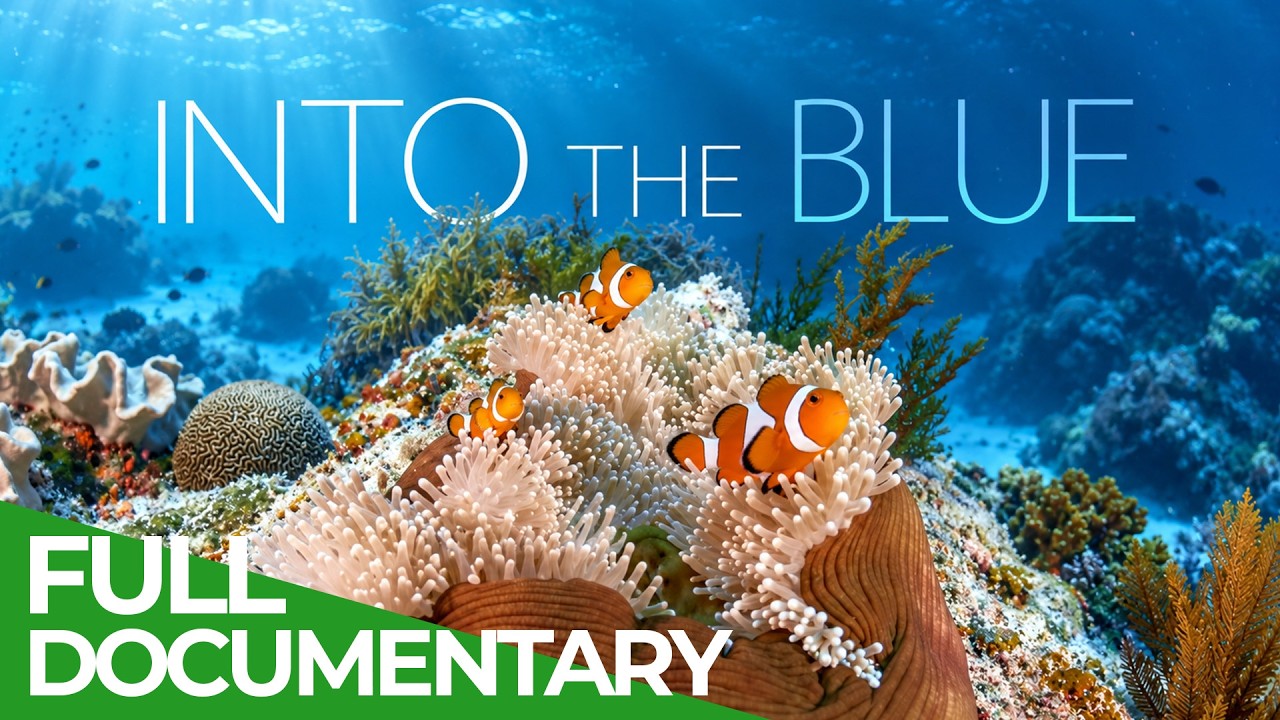
Hundreds of yellowtail barracudas, ordinarily among the most solitary fish in the Coral Triangle, are holding formation in a choreographed sweep through the blue. The area dubbed Anemone City, an expanse the documentary identifies as the world’s largest known concentration of anemone, sits beneath them. Clownfish flicker between tentacles. Porcelain crabs and shrimps, all immune to the anemone’s paralysing venom, keep the tentacles clean in exchange for shelter.
The barracudas peel away. The reef settles back into its ordinary rhythm.
A single female broadclub cuttlefish, still in the final hours of her life, hangs motionless beside the clutch of eggs she laid in the coral cavity.
 Wake up to Only Happy News!