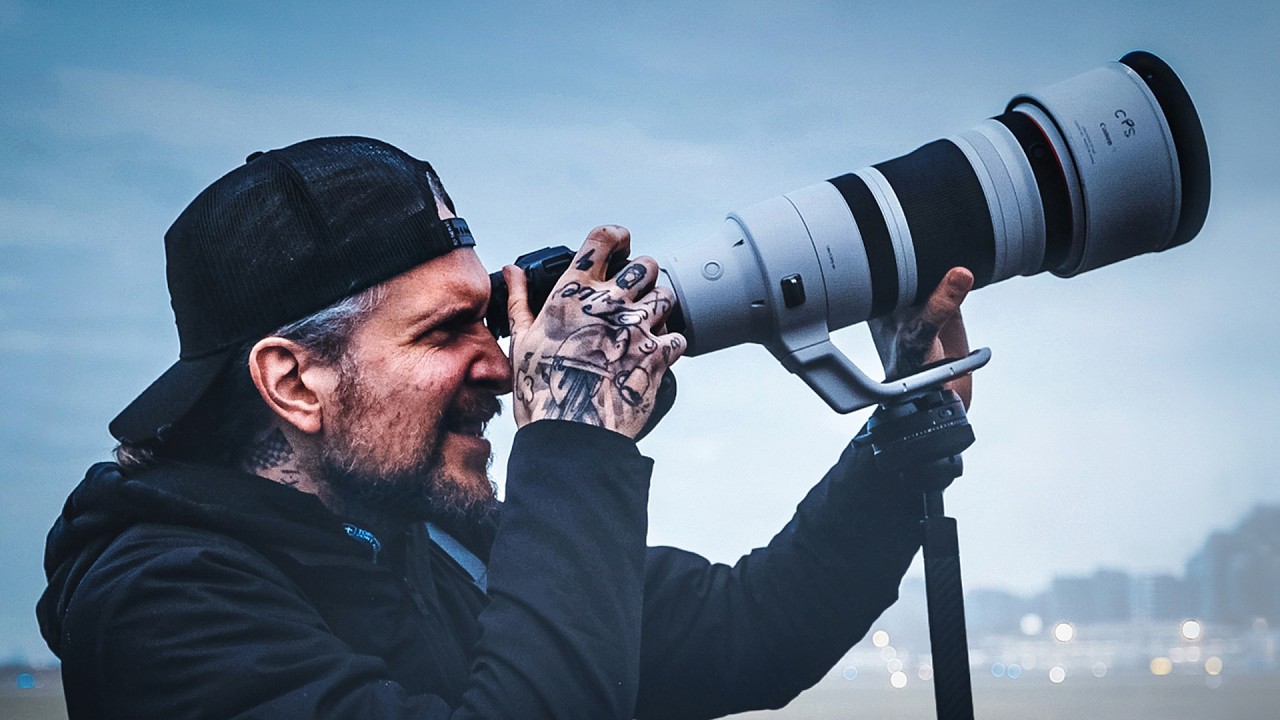
Peter McKinnon was standing on a runway in the rain, pointing a Canon R1 fitted with a 100-to-300mm lens and a 2x teleconverter toward the sky, shaking from a combination of adrenaline and coffee, when the paramotor pilot finally radioed that he was going in. The assignment was to photograph a paramotist corkscrewing down the CN Tower on a powered wing to mark the tower’s 50th anniversary, a stunt classic enough that McKinnon’s own reaction was essentially: of course Red Bull thought of this. What unfolded over the next 24 hours was a masterclass in how much invisible work goes into a single frame that lands 90 seconds after the shutter fires.
Three locations, a decision coin, and a 90% chance of fog
The day before the shoot was a full location scout across three vantage points in Toronto. McKinnon’s instinct was clear early: being strapped to the tower itself looked impressive in person but would bury the monument in the background. He wanted the CN Tower as the hero of the frame, the full silhouette unobstructed, with the paramotor and the tower readable in a single shot. That meant a rooftop across from it, not on it. The logic he used was the same logic he applies when traveling: you do not photograph a landmark by standing on top of it.
The rooftop plan almost collapsed when the crew was told there was a 90 percent chance cloud cover would block the view entirely from their chosen position at 200 Bay Street. McKinnon pulled a coin from his wallet, one side reading yes and the other no, and the group worked through it until they committed to the airport runway at Billy Bishop. The runway offered the full skyline, a lower angle that felt less like shooting up at the tower, and at least a fighting chance of a clear sightline. The Bay Street alternative, it turned out, ended up completely fogged in. The pilot also flew entirely on the south side of the tower, meaning anyone positioned to the north would have captured nothing.
The moment everyone is just waiting together
McKinnon described the minutes before Transport Canada gave the thumbs up and the CN Tower team confirmed standby as his favorite part of any project. ‘Everyone’s synced,’ he said. ‘You can feel that on a shoot when you have a collective of creatives that are all great at what they do and everyone’s prepped their tools and everyone has done their part and you’re just now waiting together to make something real.’
The pilot appeared, announced he was going in two minutes, and told the crew to watch for smoke. When the smoke opened, the paramotor launched. McKinnon had the R1 set to high-speed continuous, a frame rate he described as ‘disgustingly fast, almost like problematic,’ and he fired through the pass. The pilot was roughly half the size McKinnon had budgeted for, even at an effective focal length somewhere around 600mm with the teleconverter added. He was shaking too hard to handhold the rig and credited image stabilization with saving the take entirely.
Afterward, while the files were still loading, McKinnon admitted the shoot was harder than photographing the solar eclipse in near-total darkness.
A film camera that never got to roll
The red-roll film camera McKinnon carried through the entire location scout on a Red Bull shoot, the one he said he ‘could dump a whole roll just on’ when the city light hit right, sat unused through the actual stunt. The rain, the scramble, the 20-minute decision window, and the pilot’s last-second weather call left no room for it.
McKinnon packed his gear on the wet runway and said what he always says at the end of something like this: it is a privilege to be a part of it. He remembered watching sports photographers through a television screen as a kid, tracking the long lenses on the sideline, and thinking he wanted to be that person someday. Standing on the tarmac with a Canon R1 and a lens he also used to shoot Formula 1 and a total solar eclipse, he noted how easy it is to move through a career without stopping to register that you already became the thing you were watching.