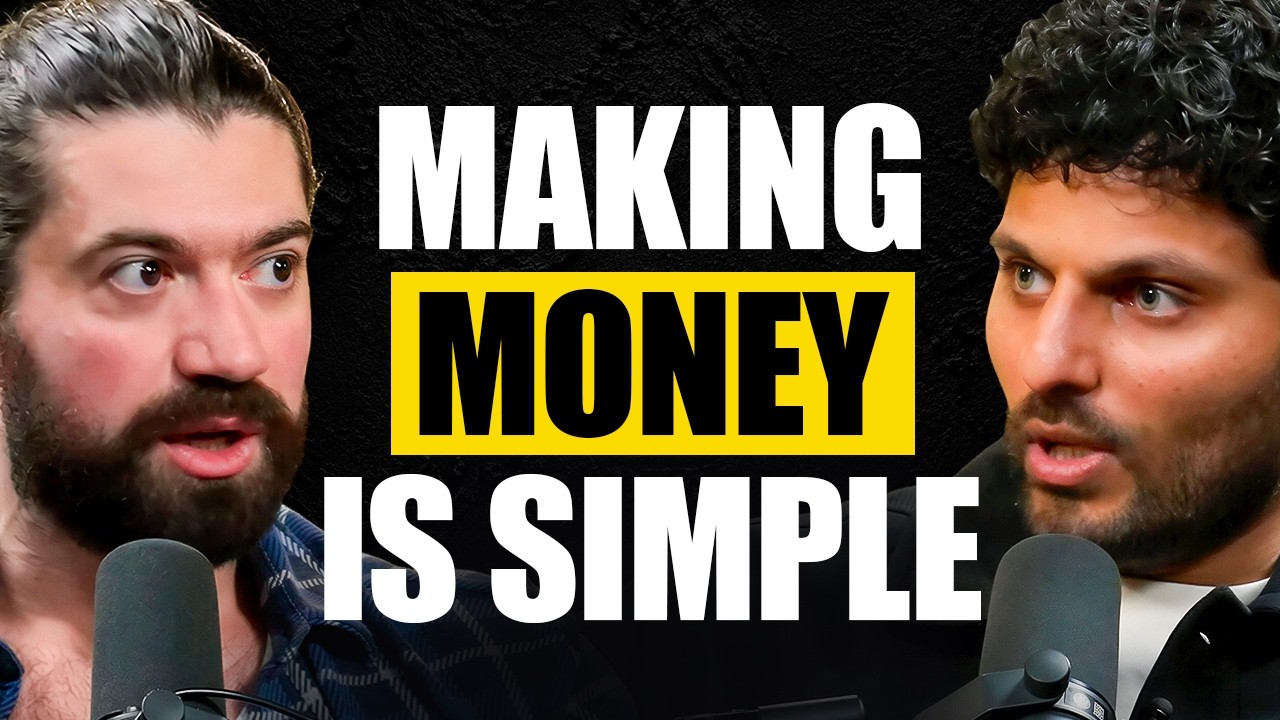
Alex Hormozi has a habit of making the complicated feel embarrassingly simple. Sitting across from Jay Shetty, he laid out a four-step path to starting a business that most people could complete before tomorrow night, and the only reason most of them will not is not a lack of money or connections or ideas. It is the same fog of confusion that once paralyzed Hormozi himself, who read ten self-help books and came out the other side more lost than when he started. What cut through the fog, he says, was one stubbornly plain question: what do I actually have to do?
Why investing first is the wrong move for most people
The single biggest mistake Hormozi sees newcomers make is a sequencing error. They look at wealthy people placing big bets on crypto or real estate and assume that is the starting point. It is not. It is the ending point. The people placing those bets already have enormous cash flow from active work, and those swings are funded by the excess. Hormozi put it plainly on the podcast: ‘making active income cool again rather than the passive bet and really just gambling is probably the first thing that people mess up.’ The passive-income dream is not wrong in principle. It is just wildly premature when you have not yet built the cash engine that makes the swings survivable.
The second myth he dismantles is follow your passion. He is not dismissive of passion as a starting point but he is clear-eyed about its limits. Passions change. Sometimes passions produce things nobody wants to pay for. And the follow-your-passion framing creates a dangerous emotional exit ramp: the moment the work stops feeling good, you believe you are supposed to quit. Hormozi reframes that discomfort as the price tag for becoming the person you want to be, a cost he says he pays voluntarily, not reluctantly.
Four steps anyone can take tomorrow
Hormozi strips business formation to its skeleton. Form an LLC. Take that LLC to a bank and open a business account. Connect the account to a payment processor. Go ask a stranger if you can do something for them in exchange for money. That is it. Four steps. A business exists.
The trickier part is the first client. His method costs nothing. Open your phone, scroll through your contacts, and send personal texts or short personal videos to people you already know. The message does not ask them to buy anything. It tells them what problem you solve and asks if they know anyone who might need it. Ninety percent of the time, Hormozi says, the person who replies says something like, ‘actually, you could do that for me.’
For those uneasy about working for free at first, he reframes the transaction entirely. The terms of an unpaid engagement can require the client to give detailed feedback throughout and leave a video review at the end on multiple platforms. A business owner who would legally pay five hundred dollars for a glowing testimonial is effectively paying you that amount when they provide one. The first twenty free clients also absorb sixty to seventy percent of all the mistakes you were going to make anyway, so by the time you charge, you are already competent. From there, Hormozi’s method is mechanical: raise your price twenty percent every five clients until people stop saying yes. That ceiling is your current market rate.
The framework for finding what to sell is equally compact. Most businesses emerge from one of three places he calls the three Ps: passion (something you are genuinely interested in), profession (a skill your current job already pays you for, even if not enough), or pain (a problem you lived through and had to solve, like a parent who had to figure out allergy-safe food for their child). Start there, not with a blank canvas facing the entire world.
The five stages every new entrepreneur moves through
Hormozi maps the emotional arc of a new business attempt in five stages: uninformed optimism, informed pessimism, the valley of despair, informed optimism, and finally achievement. Most people never reach stage four because stage three is painful enough that they pull the parachute and loop back to stage one with a new idea. The only way through is to stay inside the discomfort long enough that it forces real learning. Jumping out early means carrying the ignorance tax into the next attempt and the one after that, repeating the same thirty days for five to seven years instead of actually building something.
The moment the price tag made sense to him
At the end of the conversation, Hormozi said his north star has never been a number. It is usefulness. He defines education not as information consumed but as behavior changed: ‘if someone has had their same day over and over again, then they’re not learning.’ Which means if nothing shifts after the conversation, it was entertainment, not education.
Somewhere in a phone’s contact list, there is a person who has the exact problem someone else spent years quietly solving. The barrier to connecting them has never been lower. The barrier to distraction, Hormozi notes, is lower still.