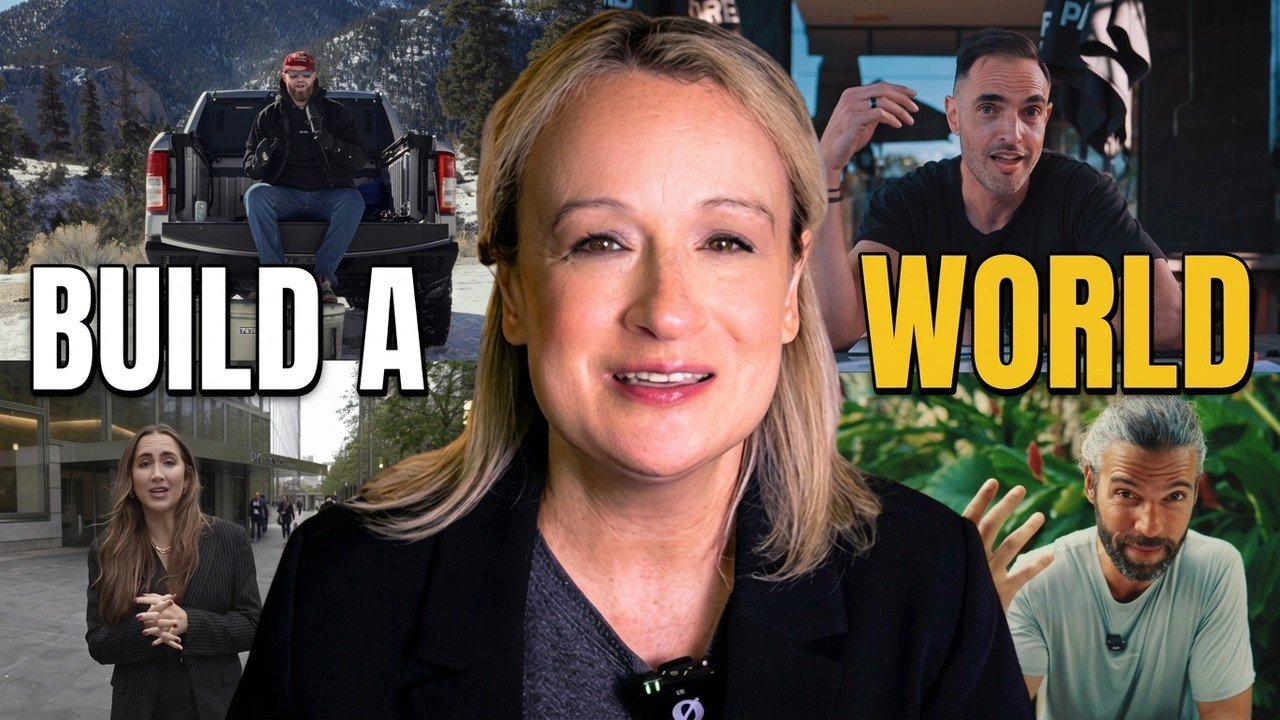
Daryn Strauss noticed something before most people had words for it. Watching brand strategist Caleb Ralston film from a moving truck on an open road, business coach Cody Sanchez shoot from the ranches and businesses she owns, and entrepreneur Tia Keymore record from airport terminals and hotel lobbies, the Writers Guild Award-winning content producer and strategist started connecting the dots on a quiet strategic shift happening across YouTube’s business coaching space. The creators who are genuinely thriving, she found, are not chasing trending topics or upgrading their production budgets. They are building worlds, and there is a meaningful difference between that and simply pointing a camera at your face.
Why information alone stopped being enough
For coaches and business owners, YouTube has long felt like a trap. Share your expertise and you are doing the right thing. But the conventional advice to ‘build a show’ triggers an immediate identity conflict, because in most coaches’ minds, a show means reality television. It means oversharing, exposing your morning routine, your messy house, your complicated feelings. Strauss addresses that fear head-on: ‘You do not binge information. You binge characters interacting in interesting worlds.’
Her reference point is Ted Lasso. Nobody keeps watching that show for soccer tactics. They keep watching because they want to be back in that locker room with those characters. The world is the container that makes the content worth returning to. For a business coach, the on-camera world functions exactly like that locker room.
What Ralston, Sanchez, and Keymore are doing is closer to what a film director calls an establishing shot, a wide view of the universe a character inhabits, than anything resembling a reality show. None of them are sharing their personal lives. They are designing what the camera sees, and those design choices communicate character, values, and credibility before a single word of advice is spoken.
Three levels that fit where you actually are
Strauss lays out a practical framework that does not require a crew, a ranch, or a truck. The first level is the world behind you: a deliberately art-directed background with books that carry meaning, objects that signal something specific, a color palette tied to your brand. Strauss describes her own setup in exactly these terms, pointing to her Writers Guild Award, a colorful vase, and a bookshelf chosen for what those books represent in her life and work.
The second level is the world around you: one or two consistent on-location settings that become associated with you over time, a coffee shop, an outdoor spot near your office, a room that means something to your story. The third level is the world in motion: airports, conference rooms, the back of a car on the way to a keynote, environments that reflect a life already in progress.
All three require the same single thing, as Strauss puts it: intentionality. The decision to design what the camera sees rather than simply filming in front of whatever happens to be there.
A still life from the studio in progress
A bookshelf sits behind Strauss in her partially assembled studio, its contents chosen before the shelving around it was finished. The Writers Guild Award catches the backlight.
Strauss framed the distinction in terms that cut through the noise for anyone who has been paralyzed by the personality-versus-professional tension on YouTube: ‘Information is available everywhere. A world is only available from you.’