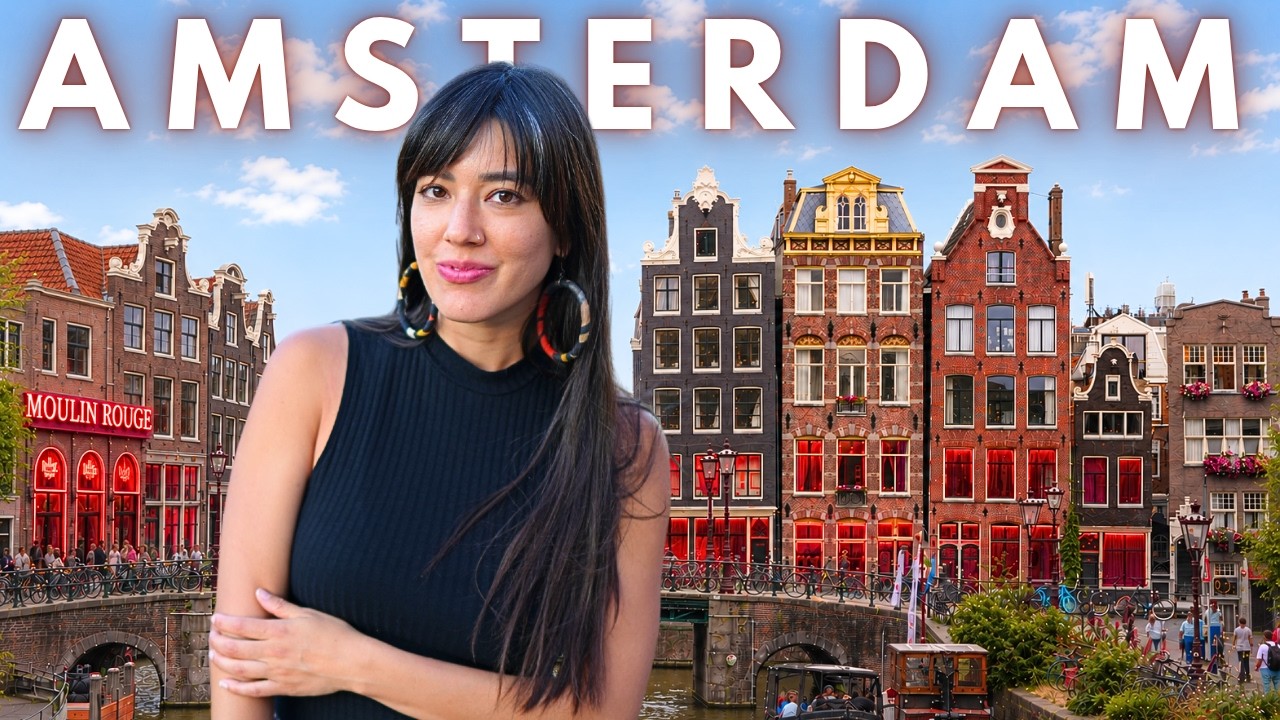
Amsterdam stopped making sense the moment the boat horn went off. The navigator behind the wheel had zero experience driving canal boats, was actively being honked at by passing vessels, and was somehow managing to stay afloat in the center of one of Europe’s most visited cities. That image, a completely unqualified person cheerfully piloting a rental through 17th-century waterways while locals shook their heads, captures something the postcards never show: Amsterdam rewards people who show up and actually try the place. For Americans especially, the city carries decades of mythology about what it permits and what it offers. The reality is richer, stranger, and more livable than the legend.
The canals that built an empire, then a neighborhood
The canal system stretching more than 100 kilometers through the city was not built for charm. During the Dutch Golden Age of the 17th century, as Amsterdam expanded outward from marshland, those waterways handled sanitation, transportation, trade, and defense all at once. The narrow canal houses lining the banks came with their own logic: a tax incentive rewarded skinnier buildings with lower bills, so property owners built tall, thin structures four and five stories high, with hooks jutting from the facades to haul furniture and cargo up the exterior since the interior staircases were too tight to manage it. Many of the houses tilt slightly forward, a deliberate design choice so that goods being hoisted up would swing clear of the brickwork below. Renting a small boat rather than joining a larger tour lets a visitor reach the narrower, quieter channels the big commercial vessels cannot access, and the difference in atmosphere is immediate.
The over 2,500 houseboats moored throughout the city are a more recent addition, born from practical necessity when a housing shortage in the 1970s prompted the government to encourage waterborne living as a solution. What started as a workaround has become some of the most coveted real estate in the city.
Just a short free ferry crossing from the old center, a ride that takes under five minutes, the northern shore delivers something that reads almost like a different city. The NDSM Wharf, once the largest shipyard in the Netherlands before it closed in the 1970s, now operates as a creative hub with massive murals, outdoor art installations, and former warehouses converted into galleries, restaurants, and bars. One waterfront spot in the complex has a small beach attached where people set out in bathing suits on sunny afternoons, treating a decommissioned industrial yard like a neighborhood park.
The red light district, explained by the people who actually live near it
De Wallen, better known as the Red Light District, sits at the literal geographic center of Amsterdam, surrounded by some of the city’s oldest architecture, including a centuries-old church that shares a wall with the illuminated windows where sex workers present themselves. The neighborhood grew from its proximity to the historic port, where sailors and merchants passing through created sustained demand for taverns and companionship. The arrangement has persisted for hundreds of years. Sex work in Amsterdam is fully legal and regulated, and a local bartender at a corner bar in the district put it plainly: ‘There are no pimps anymore. Everything is very legal and they make their own money. They can keep their own money.’
Her bar draws a mix of regulars who have been coming for years alongside visitors from all over the world. One man at the bar, 87 years old, has been a regular there for 46 years.
The morning after belongs to De Pijp, once a working-class neighborhood and now home to one of the largest open-air markets in the city. Dutch herring, cured in salt for several days until natural enzymes produce a buttery texture, is served cold with raw onion and sweet pickles, a combination that sounds bracing and lands as genuinely balanced. A nearby cafe offered Dutch apple pie, the crust thick and buttery with a slight crispness, the apple slices still holding a little crunch, the whole thing spiced with cinnamon and served with whipped cream. Dinner later brought stampot at a restaurant called Mooders, which translates to ‘mothers,’ its walls covered floor to ceiling with photographs submitted by guests over the years. The mismatched cutlery came from the original customers who dined there when it opened in 1990. The stampot itself was a mound of mashed potatoes with sauerkraut folded in, served alongside a pork sausage, a beef meatball, and bacon: dense, warming, and exactly right.
A single fork at a table full of other people’s mothers
At Mooders, every piece of cutlery on the table came from a different set, collected from the first guests who walked through the door in 1990. No two forks match. Neither do the cups.
Biking back across the city as the afternoon light stretched long across the water, the flatness of Amsterdam becoming obvious in a way it cannot from a car or a tour bus, it became clear why the canal boats keep filling up, why the ferries to the north run constantly, and why a city famous for what it allows turns out to be most memorable for something else entirely: the particular ease of ordinary life conducted beautifully in public.
 Wake up to Only Happy News!