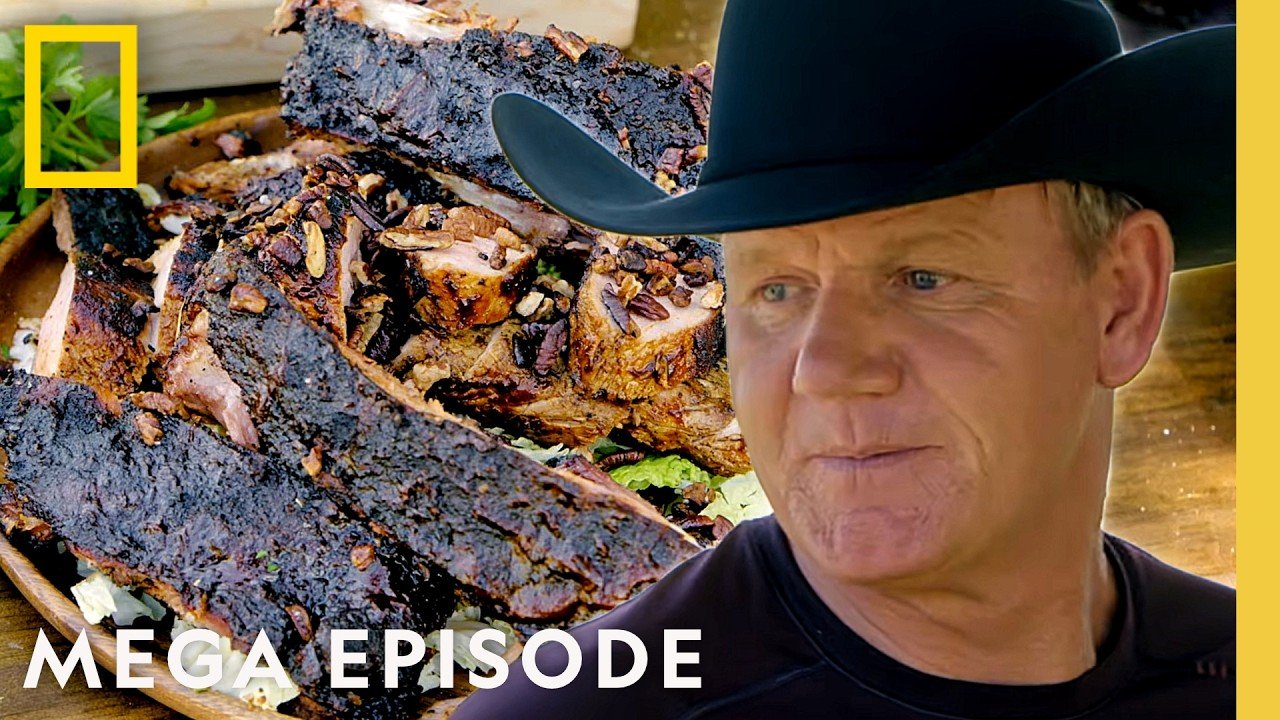
The plane touched down on a narrow barrier island 40 miles offshore from Louisiana’s coast, and Gordon Ramsay stepped out into ankle-deep water with a fishing rod and a growing sense that he was very far from any kitchen he had ever worked in. The Chandeleur Islands, the easternmost point in Louisiana, sit at the edge of Chandeleur Sound. Locals say they could be gone within decades. For now, fishing guide Lane Panepinto calls them the best fishing in the Gulf.
What the Louisiana bayou actually puts on the table
Ramsay’s week in South Louisiana began a couple of hours south of New Orleans, in wetlands that locals call ‘the end of the world.’ His guide through that world was Eric Cook, a New Orleans native, combat veteran of the US Marines, and the chef behind Gris-Gris, a voodoo-inspired restaurant specialising in southern cuisine. Cook framed the week immediately: learn the land, hunt the ingredients, then come back and go head to head on a Cajun roux. The stakes were a roux cook-off in front of a table of volunteer first responders who rescue storm victims during hurricane season.
Cook laid out the larder early. Hog head cheese, made by boiling down the head of a hog and setting it in its own natural gelatin. Wild boar andouille gumbo built on a dark roux. Satsumas grown in the fertile soil fed by the Mississippi River. Then he raised the harder subject: South Louisiana is losing roughly a football field of land a day to erosion, according to Cook, and an invasive South American rodent called the nutria is accelerating the damage by tearing through marsh grass and widening the canals. A government bounty of six dollars per tail exists to control the population. Cook’s proposal was to eat them, rebranding the animal as ‘Ragondin,’ its French name, and folding the lean, rabbit-like meat into gumbos and fricassees.
Ramsay went out with hunters Walter and Cody to tackle the nutria problem firsthand. After missing several shots and eventually hitting his target, he tried a nutria stew that Walter’s mother Julie had prepared and carried in a flask. His verdict was unambiguous: delicious, lean, no gamey taste. He declined to put it on the final cook menu, but did not pretend it was bad.
In the town of Lafitte, named for the notorious pirate Jean Lafitte, fishing guide Shaw introduced Ramsay to a vessel called the Swamp Shark, described as one of only a handful of boats like it in the world. From there the journey went airborne, with Lane Panepinto flying Ramsay out to the Chandeleur Islands. After hours of casting with nothing to show for it, a shark circled close enough to prompt thoughts about needing a bigger boat. Lane then landed a speckled trout, a yellow-mouth variety, and Ramsay finally pulled one in himself, nearly losing it before getting it into the net.
Back on the mainland, Viet-Cajun crawfish operators Tieng and his cousin Nu took Ramsay out to check roughly 900 traps spread across the marsh, with Captain Wilbur running the boat. The early traps were nearly empty. Further into the marsh, yields improved. The boil that followed used around 20 pounds of seasoning, heavy on cayenne, plus a butter garlic sauce with Cajun spice, celery seed, and lemon pepper that Nu described as the Viet-Cajun style, a cross between Vietnamese and Cajun traditions. Nu demonstrated eating the head by sucking out the fat with a fingernail. Tieng went in with his teeth.
On the final day before the cook-off, forager Ponch led Ramsay into the swamp on ATVs that quickly became stuck in mud. They walked instead, harvesting chadron, the plant known as bull thistle in England and Cajun celery locally, which Ponch suggested preparing as a simple salad with vinegar, salt, and pepper. Deeper in the swamp they found oyster cluster mushrooms growing on bark, young ones with a peppery, apricot-tinged flavour that Ramsay ate raw. After dark, the two went out by headlamp for bullfrogs, shining lights across the water to catch the reflection of eyes. Ramsay caught three, going two-for-two on one approach before landing a third.
A roux cook-off decided by the people who actually needed feeding
Cook and Ramsay cooked simultaneously, then swapped dishes before serving so the first responders would judge without knowing which chef made what. Ramsay served Cook’s venison and wild boar gumbo, while Cook served Ramsay’s chicken and andouille. The trout, finished with a satsuma beurre blanc using satsumas Cook had pointed out earlier in the week, drew a sharp reaction from Cook: ‘I should never have given you the damn satsumas.’ The first responders called Ramsay’s chicken andouille gumbo a reminder of mama’s cooking. One guest said it was ‘on point.’ The venison and wild boar drew a note that it was a little too spicy and salty. The group agreed Ramsay had grasped the essentials of Cajun cooking.
In the Great Smoky Mountains of North Carolina, the terms shifted. Chef William Dissen, a multi-award-winning chef who works with a network of local farmers, fishermen, and artisan producers, met Ramsay at the bottom of a waterfall after Ramsay rappelled down a rock face into a river. The bet this time was a truck. If the local guests preferred Dissen’s cooking, Ramsay would fly Dissen and his family first class to London for a meal at Ramsay’s restaurant. If Ramsay won, he could keep the truck keys.
Ramsay’s week in the Smokies covered crawfish trapping with Keith, who used a $6 trap built from a cheese-ball jug and a Gatorade bottle baited with bacon, yielding 28 of the 28 species of crayfish native to North Carolina. Forager Alan introduced him to a Destroying Angel mushroom, which Alan confirmed was deadly, before locating a large hen of the woods mushroom that Ramsay described as looking like coral or a piece of art. A family distillery operation run by Derek and his son Cody walked Ramsay through the corn-shelling and grinding process using machinery from 1906 and 1918 to 1921, then took him by high-speed car up a mountain to a 100-year-old family still. The legal version of the same recipe, distilled at Cody’s Nashville distillery at 50 percent alcohol, included an apple pie variant with a caramel apple finish that Ramsay identified as his secret weapon. Butcher Matt prepared livermush, a western North Carolina breakfast staple made from diced pork shoulder, pork liver, pork stock fortified with trotters, and cornmeal as a binder. Ramsay called it a southern cousin of pate and ate it on a biscuit after searing it on a grill. Cherokee educator Maliya taught him to make hominy, the traditional native American corn preparation in which lye from hickory ash removes the outer coat from kernels and increases available amino acids, then served it with beans.
At the cook-off, Dissen brought leather britches, a dried variety of greasy bean grown in the region, and made a hen of the woods mushroom gratin with bourbon, a whole roasted rainbow trout stuffed with thyme and lemon, griddle cakes topped with crawfish relish, and sour corn with country ham. Ramsay built a hominy dish with Andouille and smoked ham, livermush on a toasted scone with pickled onions and a fried quail egg, crawfish finished with apple moonshine on grits, and oyster mushrooms cooked in bacon fat with garlic. The guests found the livermush outstanding and said the hominy tasted like home. Forager Alan preferred the two hen of the woods dishes. The group ultimately gave the edge to Dissen. Ramsay surrendered the truck keys and committed to a first-class flight to London.
In Texas, award-winning Houston chef Justin Yu, whose restaurant Theodore Rex showcases local Texan ingredients, set up a different kind of challenge. No truck, no flight, just a cowboy hat versus a kilt. Yu was raised on Texan classics and refined his skills in Michelin-starred kitchens in Europe and California before returning to Houston. He started Ramsay on mesquite cutting with a chainsaw before sharing a venison chili thickened entirely by spices, with no beans and no rice.
Ramsay’s Texas week covered cattle herding with rancher Clint Radley and his daughters Meredith and Maddie, who have been riding since the age of three. Clint coordinated the herd from a helicopter while Ramsay rode a horse named Mouse. The process also included vaccinating cattle against parasites. Survival expert and former biology teacher Bob Hansler, who described himself as legally blind with one completely dead eye and one largely gone, took Ramsay into a rocky ravine to catch a Western Diamondback rattlesnake. Hansler guided Ramsay by sound while Ramsay used a pole to pin the snake, which can strike at around 175 miles an hour according to Hansler, and then removed the head with a knife. The snake was cooked inside a cactus pad buried in hot ashes for 45 minutes. Bree, Hansler’s daughter, then walked Ramsay through the back country where they foraged Texas wild pecans, wild onions, and prickly pear cactus fruit called tunas, which taste of pomegranate. Chef Emanuel Chavez taught Ramsay to make blue corn tortillas from cornico, a native Mexican seed, ground on a traditional stone, then pressed and cooked on a skillet. The brisket filling included pequin pepper, described as the national pepper of Texas, picked near a group of Texas Longhorns. A feral hog hunt with Rick Rosser, during which Ramsay was coated in what Rick called momma’s recipe mosquito repellent, produced sounds and smells from the darkness but no visual contact. Rick later supplied hog ribs for the cook.
The woman who told a world-famous chef he just wasn’t from Texas
Bree Hansler, sitting at the final table after a week of guiding Ramsay through cactus beds and pecan groves, looked across at him after the votes went to Justin Yu and said: ‘Bless your heart Gordon. You’re just not from Texas.’ She said it without malice and without pause.
At the edge of Chandeleur Sound, standing in shallow water on an island that may not exist within a generation, Ramsay had turned around and seen nothing but water in every direction. Three weeks later, at a table in Texas, that same feeling of being somewhere entirely outside his own world had followed him through snake dens, cattle chutes, waterfall rappels, and midnight frog hunts. The water was different. The mud was different. The animals were different. The remark from Bree landed the same way Lane Panepinto’s observation did back on that barrier island: some places simply will not be hurried, and some knowledge cannot be borrowed in a week.
Source: Watch original
This article was reported in June 2026.
OHN Editorial Note: This article is based on publicly available sources. If you spot an error or have updated information, contact us at editorial@onlyhappynews.com. We correct mistakes promptly.