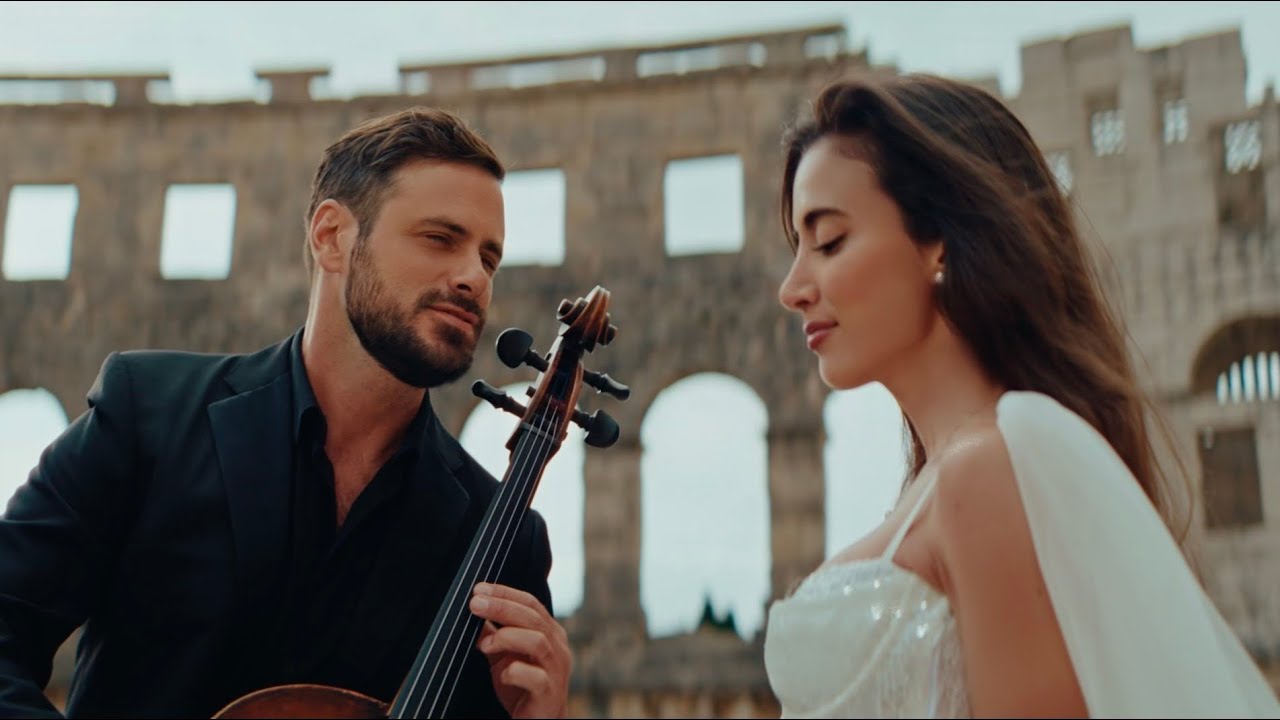
The cello enters first, low and searching, the way grief moves before it finds its shape. HAUSER’s performance of ‘Now We Are Free’ from the Gladiator soundtrack, recorded alongside vocalist Benedetta, pulls the listener into the same vast, aching space that Hans Zimmer and Lisa Gerrard built for the original film. It is the kind of music that does not ask for your attention so much as simply take it. What makes this collaboration land is the way two instruments, one bowed and one human, treat the silence between phrases as seriously as the notes themselves.
When the cello becomes a voice
HAUSER has built his reputation on finding the emotional interior of pieces that most classical cellists would treat as repertoire to be executed cleanly and filed away. Here, the approach is different. The melody from Zimmer and Gerrard’s score, one of the most recognizable in modern film music, is handed between HAUSER’s cello and Benedetta’s voice across the performance, neither competing for the foreground but each pulling the other further into the piece. The vocal passages carry the wordless, language-adjacent quality that made the original so disorienting and moving, syllables that feel ancient without being tied to any single tradition. Set against the cello’s lower register, they create a texture that is genuinely duet rather than accompaniment.
A score built for exactly this kind of space
The original ‘Now We Are Free’ was written for a moment of release after prolonged suffering, and that emotional logic transfers cleanly here. The performance builds in the way the source material demands: restrained in the opening, the cello almost conversational, then gradually opening into the fuller, warmer passages that the arrangement reserves for its middle and final movements. Benedetta’s voice rises with it, the two lines weaving through the climactic section before the piece settles back into something quieter and unresolved, as HAUSER put it in the performance, returning to the searching quality of its beginning.
A still moment near the end
The cello rests for a beat in the final passage, the bow lifted, the note still present in the room.
The collaboration between HAUSER and Benedetta on this piece demonstrates what the Gladiator score has always invited: a performer willing to treat its emotional architecture as the structure to build inside, rather than a surface to decorate. The cello enters first, low and searching, and by the time Benedetta’s voice rises to meet it, the listener is already somewhere else entirely.
 Wake up to Only Happy News!