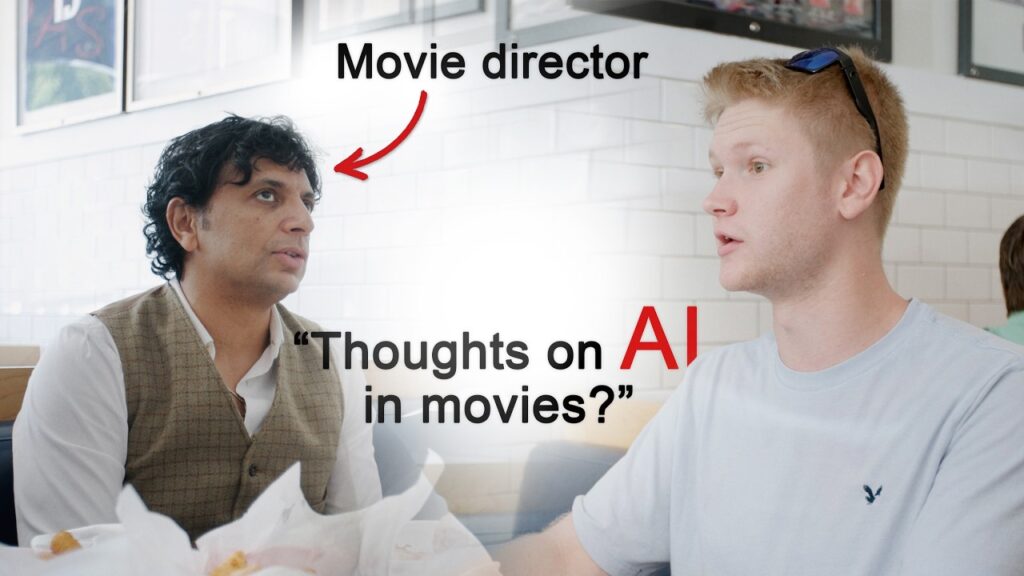
Inside a conference gathering in Arizona, Eigor pulled out his phone mid-session and asked ChatGPT’s live voice mode to translate between English and Slovak in real time. His editor Robert sat beside him, and within seconds the AI was interpreting fluid conversation between them, talking right over pauses, blending into the exchange like a quiet third participant. It was the kind of moment that makes an abstract product announcement suddenly feel real. OpenAI shipped an enormous wave of changes in a single week, and the question worth asking is which ones actually change how people work every day.
What the new Work tab actually does
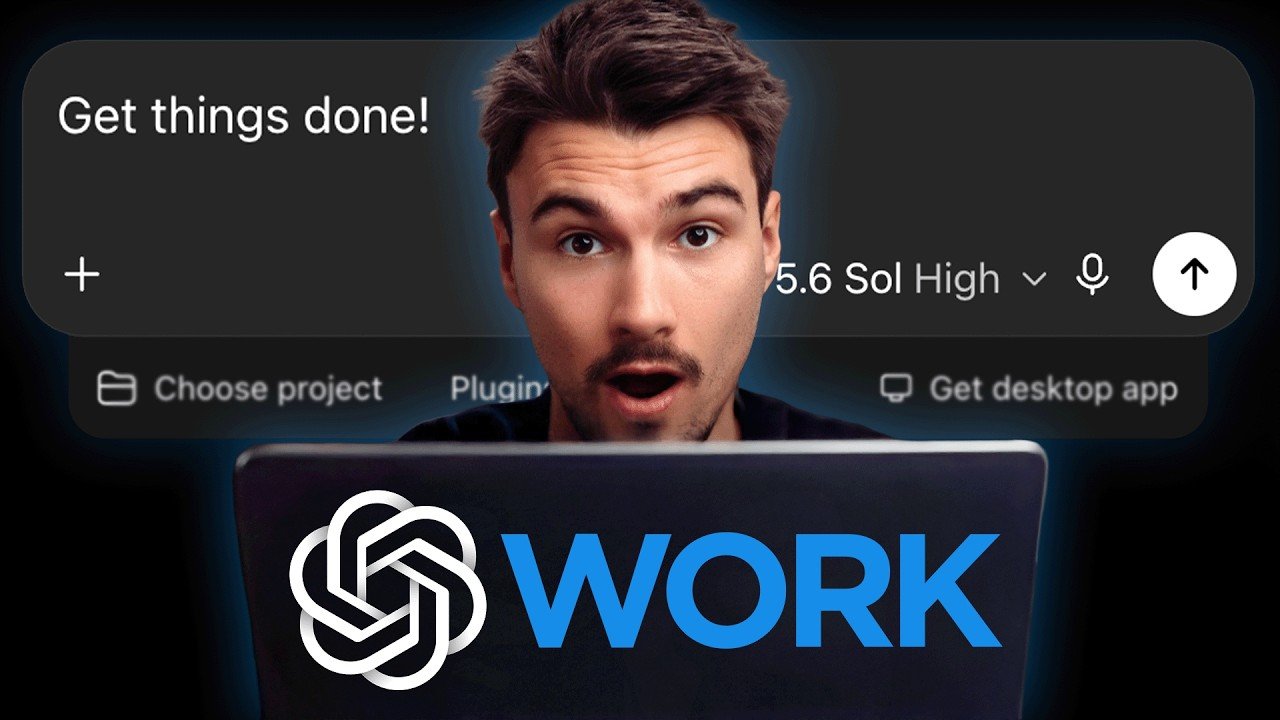
The biggest structural change to ChatGPT is a new tab sitting at the top of the web interface. Switch from Chat to Work and the experience shifts into something closer to an agent-style loop. The system makes a plan before it acts, connects to external services through a library of over 1,500 plugins (now called connectors), and allows users to define explicit inputs and outputs for any task. That input-output framing is the core idea: you tell it what comes in, what needs to come out, and let the steps in between run. This Work mode is available on all plans, including the free tier, which separates it sharply from Claude’s equivalent, which sits behind a paid subscription.
A standout feature within Work is Sites. Give it a prompt, pick one of the new models, and ChatGPT builds a genuinely hosted website rather than an artifact that lives inside the tool. The URL is clean and shareable. There is no banner warning readers that the content is user-generated and unverified, the way Claude’s published artifacts display. It is a functional site, not a prototype. Sites is a paid-plan feature, but the broader Work tab remains free.
Eigor tested the presentation output at length. After an initial ten-minute generation run, he fed the tool a reference image from his own website and asked it to restyle the entire deck to match. Eight minutes later, the presentation came back with a dark grid background, consistent glows, and imagery that reflected the original direction. ‘I feel like all of this being editable in here now is so powerful that it makes me want to use this as my primary presentation creation tool,’ he said, opening the finished file in PowerPoint without friction.
New models, a unified app, and one Reddit user’s 1,400-page experiment
The new model family includes GPT-5.6 Saul, Terra, and Luna, with Saul positioned as competitive with Google’s Gemini model on benchmarks. The Ultra tier of Saul coordinates a minimum of four simultaneous agent instances working in parallel on a single task, which is reflected in its cost. One Reddit user fed it ten PDFs and asked for a single comprehensive document. The output ran to roughly 700 pages and consumed his entire monthly usage on the $20 Pro plan in a single prompt. Eigor’s read on that: a human would charge considerably more than $20 to synthesize 1,400 pages of source material.
On the application side, OpenAI merged several standalone tools into one. The new desktop app absorbs the now-discontinued web browsing tool called Atlas, replaces the old desktop client, and also replaces Codex as a standalone application. The result is a single surface that handles chat, agent-style work, web browsing, and desktop recording. Skills, previously a distinctive Claude feature using a specific file format, are now supported inside ChatGPT’s plugin store under their own tab, and any skill file that works in Claude can transfer directly.
Claude’s own co-work tool shipped a notable update the same week, adding web-based access so scheduled tasks can now run in the cloud without requiring a local machine to stay on. Some connectors still require a local computer, and migrating an existing scheduled task to cloud execution requires rebuilding it manually rather than flipping a switch.
Robert, mid-translation
Robert, the editor who sat beside Eigor during the voice mode demo, heard his own Slovak words come back in English almost instantly, the AI speaking right over the natural pauses in the conversation.
The live translation demo was the unexpected middle of a week that was mostly about menus, model tiers, and connector stores. Eigor has been testing the new desktop app and expects to cover the upgraded web browsing feature, which led OpenAI to retire Atlas entirely, in the following week’s coverage. The Work tab is already open. The site it builds has a clean URL. Whether it earns a place in daily workflows is the question the next few weeks will answer.