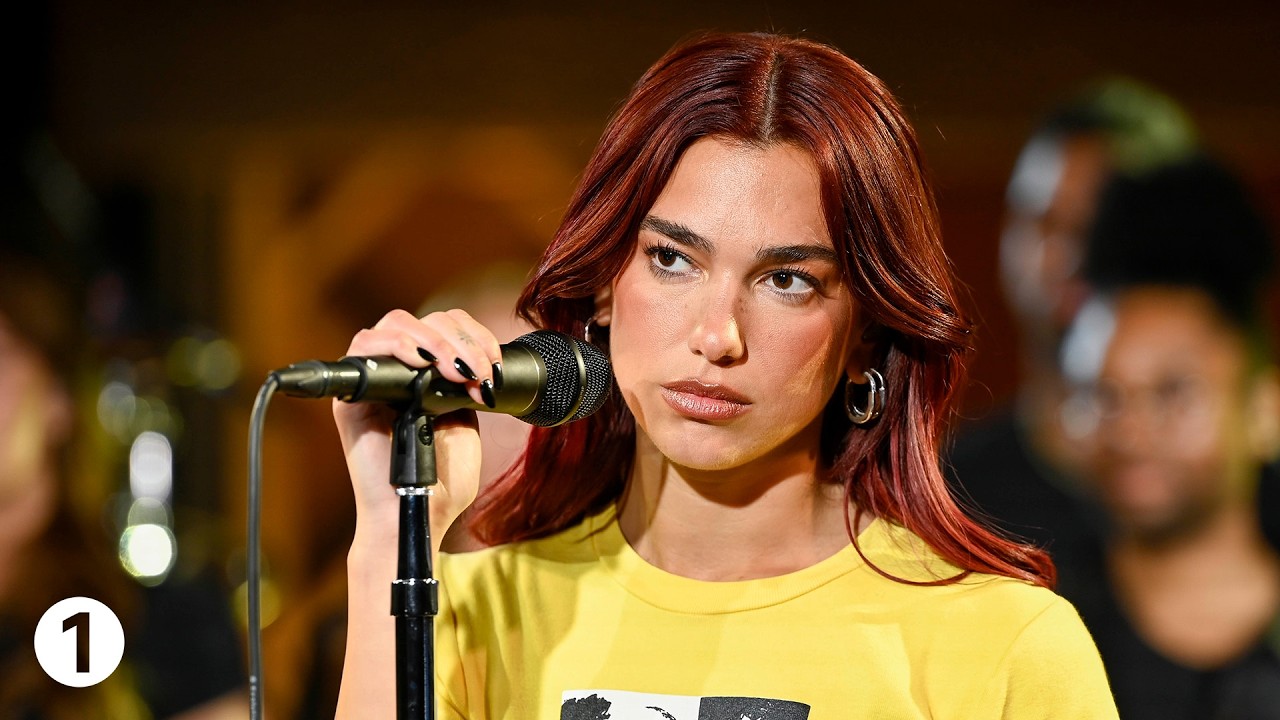
Dua Lipa walked into the BBC Radio 1 Live Lounge and made a quiet declaration: training season is over. For anyone who has ever stayed too long with the wrong person while privately holding out for someone who talks straight to the soul, that line lands somewhere specific. The performance strips the track down to its essential argument, and the room lets it breathe.
What the song is actually asking
‘Training Season’ is not a breakup song and not quite a love song. It is a criteria list delivered at full emotional velocity. The opening verse sets the tension immediately: ‘Are you someone that I can give my heart to? Or just the poison that I’m drawn to? It can be hard to tell the difference late at night.’ That admission, that honest uncertainty about whether attraction is a sign or a warning, is where the song earns its audience. Lipa is not playing invulnerable. She is playing precise.
The chorus builds the standard openly: someone whose love ‘feels like a rodeo’, who knows how to take control when she is vulnerable, who is ‘straight talking to my soul’ rather than performing. The phrase ‘conversation overload’ arrives like a specific detail from a real relationship, the kind of talking that goes on too long because both people actually want to be there. It is a vivid contrast to the careful, coached dynamic the verses are leaving behind.
Where the Live Lounge performance lands
The middle section of the song sharpens into something almost athletic: ‘Can you compete? Now is your time. Run when you hear that whistle blow.’ The sports metaphor, which gives the track its title, snaps into focus here. The training period, the provisional, evaluative phase of early romance, is being called. Lipa puts it plainly: ‘I don’t want to have to show you. If that ain’t true, then let me know.’ It is a closing argument, not a plea.
By the time the outro cycles through ‘training season, training season, training season over,’ the repetition functions less as a hook and more as a verdict being read aloud. The Live Lounge setting, with its tight acoustics and attentive room, gives each repetition a little more weight than a festival stage would allow. As Lipa herself framed it in the lyric: ‘I tried to see my love as in a good light. Don’t want to do it just to be nice. Don’t want to have to teach you how to love me right.’
The line that stays
A specific phrase from the bridge
One moment, mid-song
Deep in the second chorus, the melody pushes into ‘deeper than I’ve ever known,’ and Lipa holds the word ‘known’ just a beat longer than the recorded version does. The room catches it.
The opening question, ‘are you someone that I can give my heart to,’ hangs over the entire performance and never quite gets answered. That is the point.
 Wake up to Only Happy News!