Deep in the Canadian wilderness, a Goshawk cuts through dense forest at 40 miles an hour, earning her nickname: the Phantom of the Forest. She is one of the most agile predators on the continent, and yet a chickadee stops her cold. The chickadee’s alarm call carries not just a warning but a coded message broadcasting the hawk’s exact position and speed, and squirrels have learned to mimic it almost perfectly. That signal ricochets through the trees at over 100 miles per hour, more than twice the hawk’s own velocity. The smallest creatures in the forest are running a warning network that outpaces the apex predator every single time.
This is the world of animal alliances, where the most surprising survival tools turn out to be other animals.
When flying squirrels learned to be their own signal flares
In the same North American forest, a northern flying squirrel faces a different kind of danger. Weighing just five ounces, he cannot store enough body fat to hibernate, which means foraging all winter at temperatures that drop to minus 30. A single mushroom yields only four calories. He needs 20 to survive the night. Racing up and down trees burns more energy than that search can replenish, so he deploys the patagium, a furry wingsuit stretching from wrist to ankle, and glides nearly the length of a football field between trees to cover ground with minimal effort.
But distance from the group is its own death sentence. Separated from his friends in the dark, he sends out an ultrasonic emergency call that most predators cannot hear. His group hears it, replies, and he navigates toward them. What makes this reunion possible is a discovery that has only recently come to light: flying squirrels glow. Under ultraviolet light, they fluoresce, absorbing moonlight in one color and emitting it in another. It is believed their luminous bellies act as beacons, letting the group track one another through the forest canopy and follow each other all the way home.
Owlets, bison, and the art of a well-timed rattle
On the open plains of Montana, burrowing owls take community to a different extreme. Standing just ten inches tall, they are the only owl species to live in groups of up to 100, forming what amounts to a neighborhood watch for their young. At one month old, an owlet’s eyesight is already fully developed, but learning to rotate their concave faces to funnel sound toward their ears, amplifying noise up to ten times, still takes weeks of practice.
The real exam comes without warning. When a 2,500-pound bison targets the loose soil around a burrow entrance for a dust bath, it could collapse the den entirely. The owlets’ response is to hiss and rattle with enough precision to mimic a rattlesnake convincingly enough to scare off an animal 11,000 times their size. As the narrator put it, ‘you don’t have to be big and tough to survive. What you really need, are friends.’
The underground network that feeds a forest
Perhaps the strangest alliance of all requires no eyes to witness it. Beneath the forest floor, fungi form a matrix of hairlike threads that tap sugars from tree roots and return minerals drawn from the soil, a subterranean exchange that researchers have named the Wood Wide Web. Once connected, trees can send chemical and electrical signals to neighbors, warning of drought or beetle invasion.
A Douglas Fir, standing for decades, detects an incoming Douglas Fir beetle assault and begins broadcasting defensive alerts to surrounding trees. The beetle summons reinforcements with a pheromone, and the fir will be dead within weeks. But in its final act, the dying tree diverts sugars to its roots so those reserves can travel outward through the fungal network, feeding neighbors and offspring, strengthening the forest it can no longer be part of.
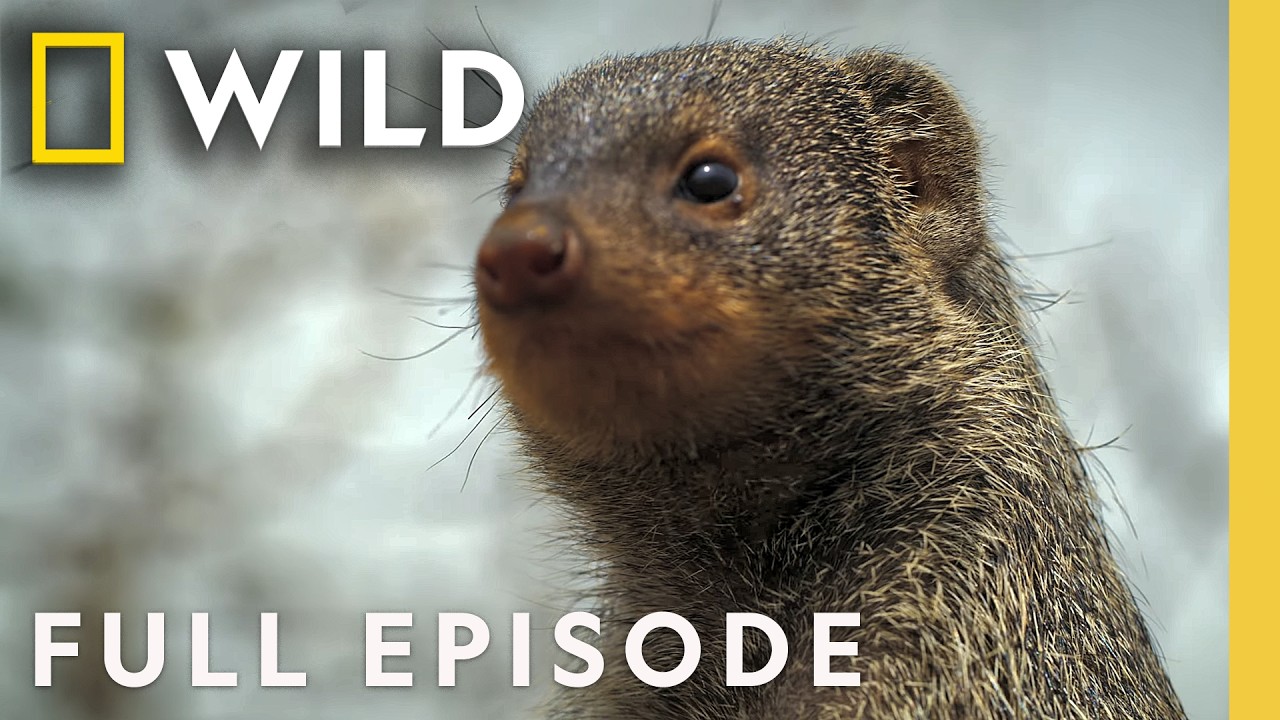
Along the way, in Laguna, Brazil, between May and June, bottlenose dolphins herd mullet through murky estuarine water using echolocation, then signal local fishermen with a distinctive flick of their flukes. The nets scatter the fish directly toward the waiting dolphins. Both species leave with a full catch. In Uganda, warthogs have learned to roll onto their sides in the presence of a mongoose band, a cross-species invitation understood entirely through body language, allowing mongooses with a sense of smell 1,000 times sharper than a human’s to remove blood-sucking parasites from spots the hog cannot reach. That particular arrangement has been documented in only two places on Earth, both near human settlements where reduced predator pressure lets wary animals finally relax.
The firefly no one could see from the ground
In a small patch of forest in the mountains of Mexico, on a few special nights each year, a male firefly emerges after two years underground. He drives oxygen into his abdomen, triggering a reaction between luciferin and luciferase that produces bioluminescence. It is not enough. Females respond only when males flash in synchrony. So thousands of rival males gradually adjust their timing until they reach what the source calls ‘supernatural synchronicity,’ a rolling wave of coordinated light. Of roughly 2,000 firefly species, only around 12 display in unison. The female’s reply signal is so faint she must slip it into the gap between the males’ flashes, and ten males compete for each one.
The cocktail ant who measured a giraffe by tremor
On the African savanna, the whistling acacia defends itself against elephants through a low-frequency sound produced when the wind passes through holes gnawed by cocktail ants into the tree’s swollen thorns. The ants raise their young inside those same thorns and feed on the tree’s sugary nectar. When a giraffe, immune to the acoustic deterrent, begins feeding, the ants detect the attack not through sight but through hypersensitive vibration sensors in their legs, measuring minute differences in tremors to determine the direction of the threat. They then bite the tongue and face of an animal 158 million times their size, and blast noxious acid from raised abdomens. It is how they earned the name cocktail ants. Eventually, the giraffe moves on.
One dead tree, still feeding the forest
The Douglas Fir at the center of the Wood Wide Web story is still out there, or rather what it left behind is. Its sugars are moving through the fungal threads right now, feeding the trees that surround the space it once occupied.
High above in the Canadian wilderness, somewhere in that same forest where the Goshawk still hunts, a flying squirrel tucks into a den shared with a dozen others, its faint ultraviolet glow invisible to anything that might want to follow it home.