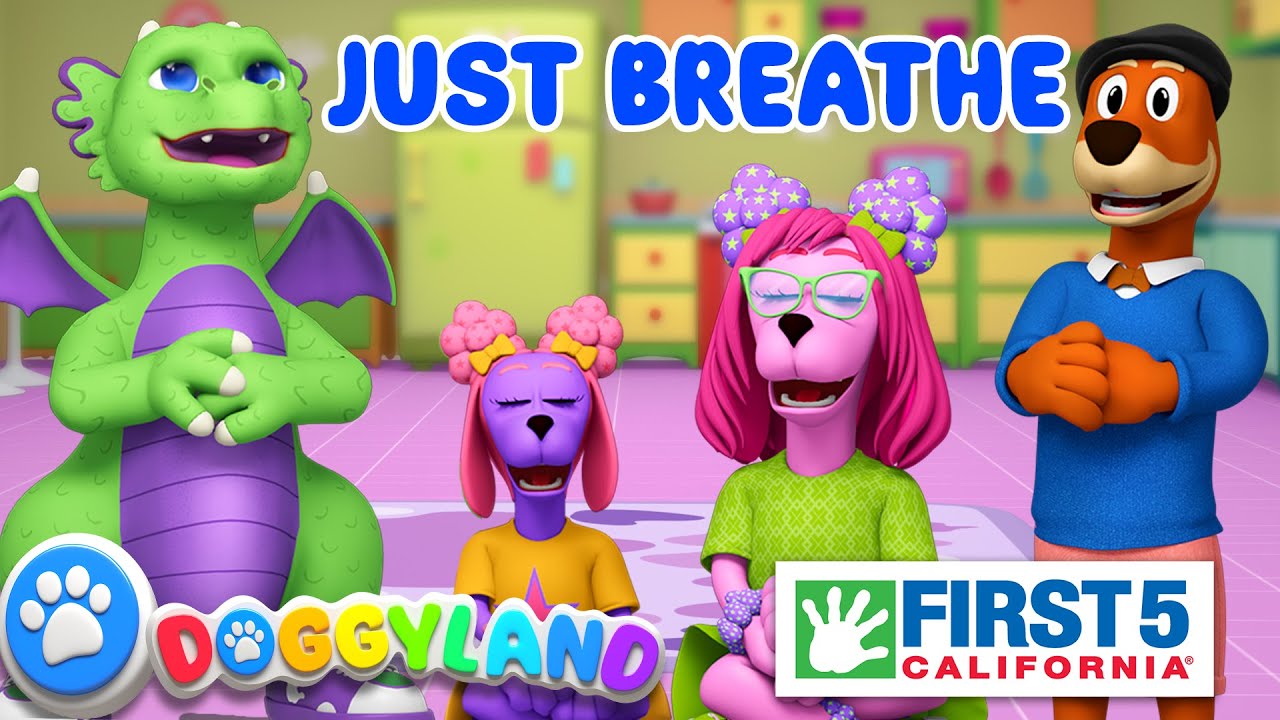
Woofee and Barks-A-Locks had worked so hard on their fort. Then it fell apart, and in an instant the two friends were pointing fingers at each other, voices rising in that familiar spiral kids know well. What happened next, a simple breathing trick passed down from a parent, is the kind of emotional tool that researchers and caregivers have been trying to get into children’s hands for years. This song, produced in partnership with First 5 California and their friend Roar the Dragon, plants that tool inside a melody a child will not easily forget.
When the fort falls down and someone has to be blamed
The setup is instantly recognizable to any child who has ever shared a project with a friend. Woofee and Barks-A-Locks are upset, their fort in ruins, and the blame is flying in both directions. Bow Wizzle steps in not with a lecture but with something a parent once taught her: when the feeling gets too big, pretend you are a dragon and breathe it out.
‘Breathing really works,’ Woofee says after the three of them try it together, and the relief in the moment is genuine enough that it lands without any adult-sounding explanation attached.
The song builds the technique into a repeating structure that children can grab onto fast. When tired, grumpy, and ready to shout, the dragon breath is the release valve. The lyrics also widen the frame past the kids in the room: ‘If mom’s upset or dad is stressed, it’s their time to stop and take a breath.’ That single verse quietly tells a child that the people they depend on most feel overwhelmed sometimes too, and that the same tool is available to everyone in the household.
What the song actually teaches, verse by verse
The middle section of the song names the deeper reason the breath matters: ‘It helps you think clearly, so you don’t say or do something that you really didn’t mean.’ That is a surprisingly precise description of what a regulated nervous system makes possible, delivered in a line a four-year-old can follow and repeat.
By the close of the song, the apologies come naturally. Woofee tells Barks-A-Locks sorry for blaming her. Barks-A-Locks says sorry back. No adult intervened to force the exchange. The breathing created the space, and the kids filled it themselves.
First 5 California, which supports children from birth through age five and their families, brings Roar the Dragon into the Doggyland world as a living demonstration that dragons and big feelings are not so different: both need a good exhale.
Bow Wizzle, mid-song
Bow Wizzle stands between two arguing friends, a crumpled fort on the floor behind them, and offers the one thing her parents gave her: ‘Pretend you’re a dragon and breathe.’
Woofee and Barks-A-Locks rebuilt nothing. They did not need to. By the time the last chorus finished, the fort was still down and both of them felt fine.
 Wake up to Only Happy News!