[See the Full Article about Brett McFarland’s Story on Peter Santenello’s Documentary]
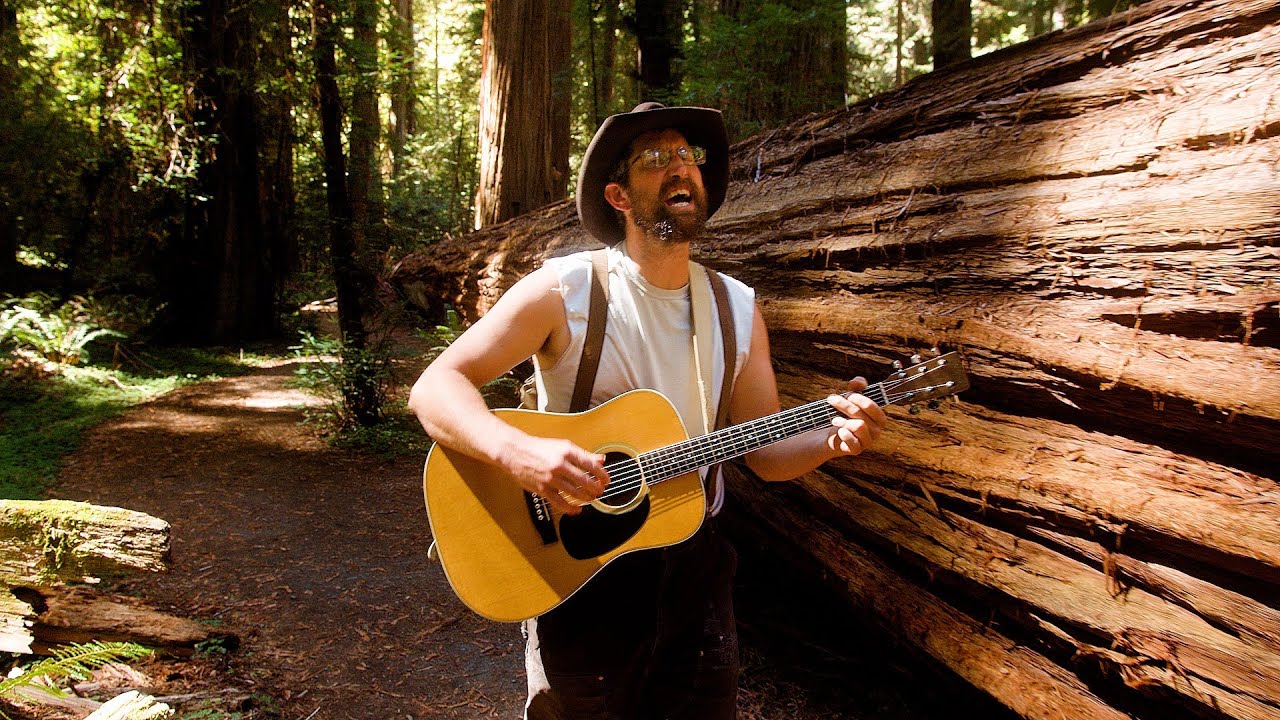
Brett McFarland built a home with his own two hands, got help from friends, and pulled food and shelter from the land. That opening declaration is not a metaphor. It is the founding premise of ‘Humboldt,’ a folk-country anthem that doubles as a civic portrait of one of California‘s most fiercely independent counties, where the culture of mutual aid, rough beauty, and stubborn self-reliance is not a marketing angle but a lived fact.
Where rednecks and hippies made something new
The song earns its credibility by going back to the origin story. McFarland places the founding of modern Humboldt’s character in the summer of 1968, when the counterculture Back-to-the-Land movement collided with the working-class rural folks already there. He puts it plainly: ‘a redneck made love with the hippie, they had themselves a child and named her Gypsy.’ That union produced something that does not fit neatly into any coastal Californian or inland conservative category, a community that carries both guts and flowers in peace and love while acknowledging, without flinching, that the history underneath is stained in blood. The song moves through the stretch from Hooper down to Table Bluff, referencing the Eel River and the hard lives people built along it, before landing back on that same refrain: this is still how things are done here.
See the Full Article about Brett McFarland’s Folk Song “About Losing the Country You Grew Up In Is Striking a Nerve Right Now“
The chorus is not triumphalist. McFarland’s version of Humboldt pride is grounded in specifics. Butchers still operate. Mills still run. If you need a favor, you call your neighbor. These are not nostalgic images; they are presented as current, operational facts about a place that chose a different pace and held to it.
The county that grew the grass the rest of the country smoked
McFarland does not sidestep Humboldt’s most internationally recognized industry. He addresses it with the same plainspoken directness that runs through every other verse: ‘if you live in this country and you ever smoked grass, you can thank Humboldt County for risking their ass.’ The growing operations that started in the 1980s kept going until the laws eventually caught up, and McFarland frames that entire arc not as criminality but as outlaw stubbornness, the same quality that defines everything else about the place. ‘There ain’t another place more outlaw country,’ he sings, and in context it reads as a compliment that covers timber workers, hippie homesteaders, and cannabis farmers in one sweep.
The trees, he notes, are ‘like you ain’t never seen.’ The water runs clear and blue straight out of a dream. A person can be whatever kind of strange they need to be, because what gets measured here is on the inside.
The home he is still standing in
The house McFarland describes building at the start of the song, the one assembled with his own hands and help from the people around him, never comes up again by name. But it is still there in every verse.
Humboldt County, in this telling, is not a destination or an identity to perform. It is a structure someone put together slowly, with whatever was available, and decided to stand in.