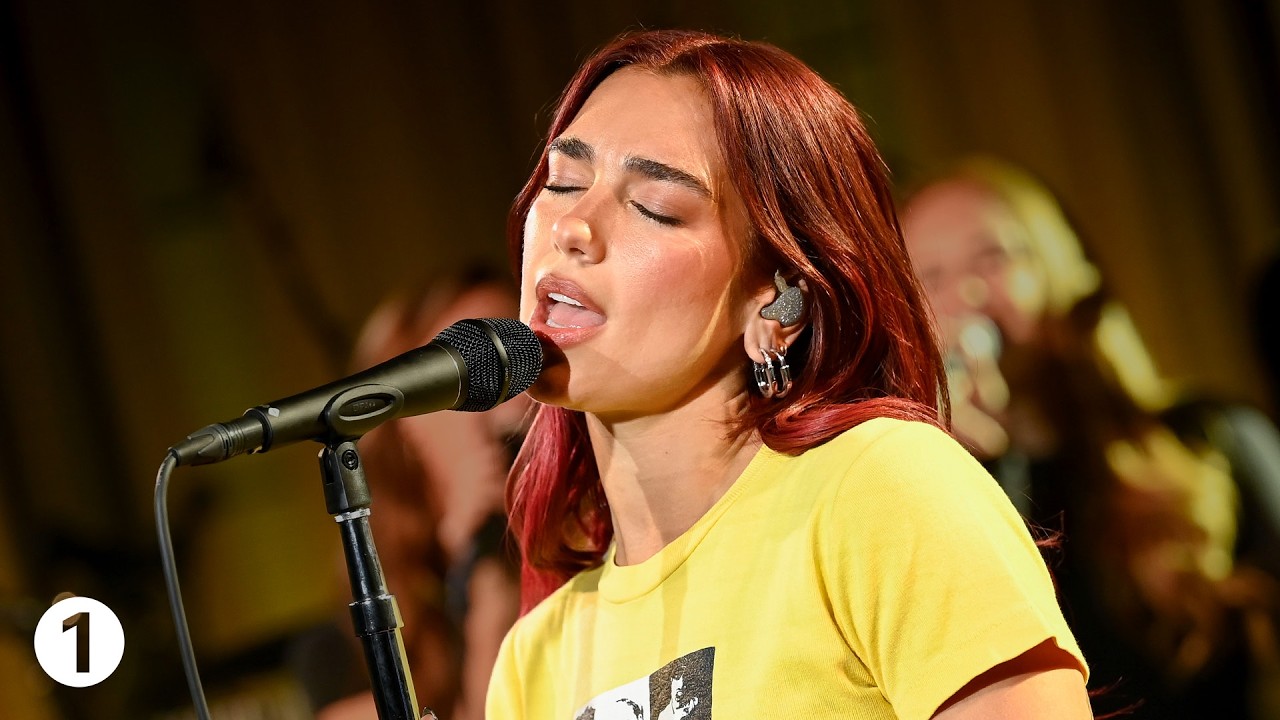
The cheering started before the last note had fully faded. Dua Lipa wrapped her Live Lounge performance of ‘Be The One’ at BBC Radio 1 with a simple, breathless ‘Thank you so much. We did it.’ and the room erupted. That moment, unscripted and genuinely warm, captures exactly why a Live Lounge session lands differently than a polished studio cut: the performance is alive, and everyone in that space knows it.
Where the song opens up
The track builds from a place of contrast. The opening lines frame two people reading the world in completely different registers: one sees the moon, the other looks at the sun, one sees blue where the other sees red. That collision of perception is the emotional engine of ‘Be The One,’ and Lipa leaned into it across the performance, letting the verses breathe before the chorus pushed forward. The plea at the center of the song, a request for just one more chance to prove herself, gained real urgency in the room, carried by the pull between restraint in the verses and full commitment in the repeated title line.
The moment the room shifted
The final stretch of the performance is where the Live Lounge format earns its reputation. Lipa repeated the ‘Be the one’ refrain in a long, layered run, extending it well past the album version’s resolution, adding the direct aside ‘Will you be mine?’ before pulling the full chorus back one more time. She called for an extra pass with ‘One more time. Come on.’ and the band followed without hesitation. That stretch of spontaneous extension, the kind of thing that only happens when a performer trusts the room and the room trusts them back, is what separates a Live Lounge session from a standard promotional appearance.
Lipa closed with ‘We did it,’ three words that belonged equally to her, the band, and everyone listening in the space.
The line that stayed
She delivered the ‘Will you be mine?’ interpolation unrehearsed in feel, dropping it into the repeated chorus section as a genuine question rather than a lyric.
The BBC Radio 1 Live Lounge has a specific talent for finding the version of a song that a studio session cannot quite reach. What Dua Lipa delivered with ‘Be The One’ was exactly that: the same chords, the same melody, but with the margins opened up just enough that the song could breathe, push, and finally land somewhere the recorded version never fully goes.
 Wake up to Only Happy News!