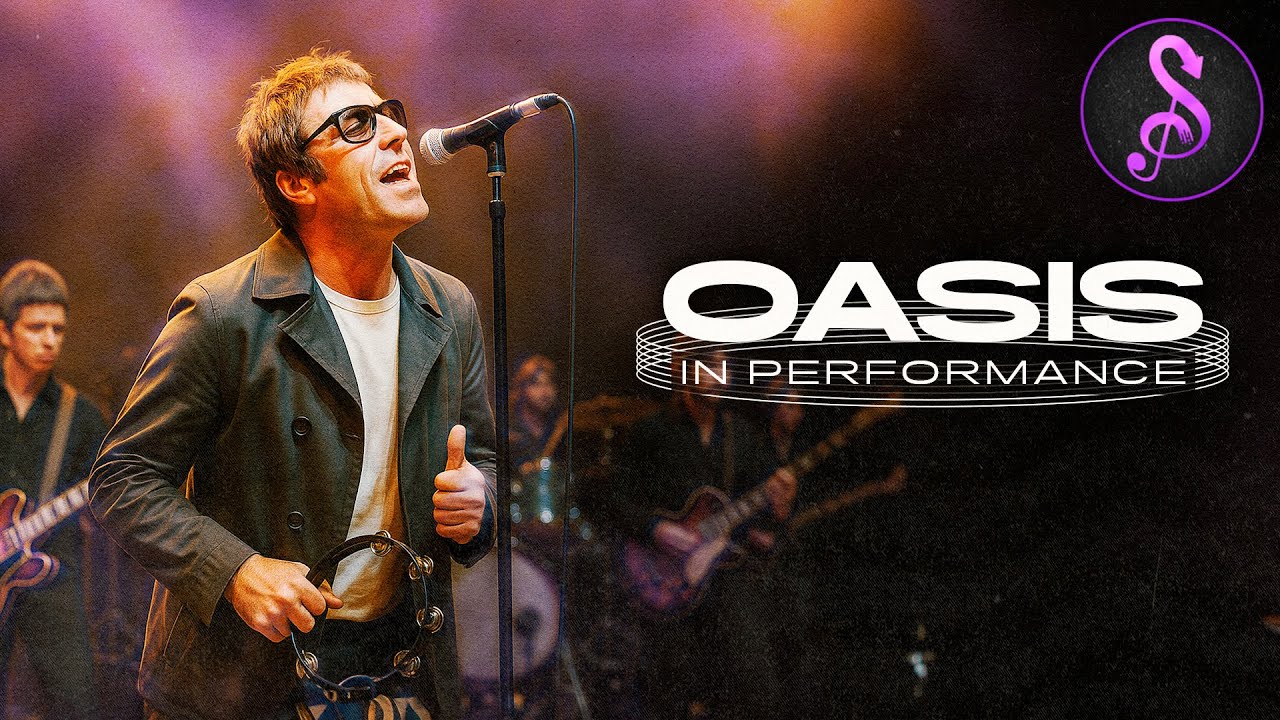
On a small ferry crossing the Fowey Estuary in Cornwall, five young men from Manchester arrived at a remote recording studio called Sawmills with a point to prove and almost nothing to lose. The year was 1994, British rock was drifting, and Oasis were about to spend 10 days making an album that would sell 100,000 copies in its first four days. That record, Definitely Maybe, became the fastest-selling debut in British history, and the story of how it got made is as raw and unlikely as the music itself.
A studio only a boat could reach
Before Sawmills, there had been failure. The band’s first attempt at recording took place at Monnow Valley Studios in Monmouth with producer Dave Batchelor, who had worked with the sensational Alex Harvey Band. The sessions, and a follow-up attempt at Olympic Studios in Barnes, produced almost nothing usable. The problem was method. Producers wanted to isolate each instrument, spending long stretches on drums alone before layering bass and guitars separately. Oasis needed to play together in a room and feel it.
Sawmills, accessible only by ferry, gave them exactly that. Tucked away from clubs, cities, and distractions, the band recorded in what one contributor described as a more open, relaxed atmosphere. There was no careful separation of tracks. Guitars bled into each other and merged into what he called ‘a big wash of sound.’ The total cost for the album came to £75,000, remarkable given how much of the work had been started from scratch after the earlier sessions were scrapped.
The drum sound was tough. The guitars dominated, thrusting out of the speakers, loud by any measure of the era. From the moment Rock ‘n’ Roll Star opened the record, it was, in one assessment, ‘a great filthy noise’ and exactly what the moment required.
The songs that rewrote the rulebook
Supersonic was originally meant to be a supporting track. Bring It On Down had been the planned first single. But once the band laid down Supersonic, its urgency was obvious. Running at 100 to 101 beats per minute in the key of B, a key described here as fantastically hard for rock guitars and one Oasis returned to repeatedly, the song burrowed into the brain and refused to leave. Liam Gallagher himself put it plainly on the question of what Supersonic actually meant: ‘I couldn’t tell you. Helicopters and tissues and I don’t know what else is on that one.’
Live Forever arrived as the third single in August 1994 and reached number 10 in the UK charts, hanging around long after most songs would have faded. It opened with drummer Tony McCarroll’s instantly recognizable kick pattern, and it showed a band capable of something more vulnerable beneath all the swagger. Noel Gallagher has said publicly the song demonstrates there was more depth to Oasis than people initially assumed.
Cigarettes and Alcohol closed out the album’s run of singles in October 1994 and captured British working-class life with a resignation that felt oddly freeing. For fans on the dole, students, and anyone heading out on a Friday night, the song was a mirror held up without apology.
Glastonbury, before anyone knew what was coming
That summer, after the release of Shakermaker, Oasis played Glastonbury for the first time. It was their first outdoor festival and their first gig with real mainstream exposure. One eyewitness at the side of the stage, who had first seen the band just two months earlier in April, recalled Liam standing on stage in a dark jumper with his shirt collar out, looking like an absolute rock star while the crowd around him was covered in mud. They reportedly closed with a version of I Am the Walrus. ‘They stole that gig,’ the same witness said.
Liam’s stage approach defied every convention. He stood with his hands behind his back, never touching the microphone, staring straight into the audience. There was no warm-up routine, no theatrical gesture toward the crowd. It was, as one observer put it, ‘almost an anti-showmanship kind of thing,’ and it forged a bond with audiences precisely because he looked no different on stage than he did walking down the street.
The moment they walked into the room
A dark jumper. A shirt collar sticking out. Mud everywhere except on stage.
In those 10 days at Sawmills, with guitars bleeding into each other and no ferry back to civilization until the work was done, Oasis made an album that the British buying public had not known it was waiting for until it arrived.