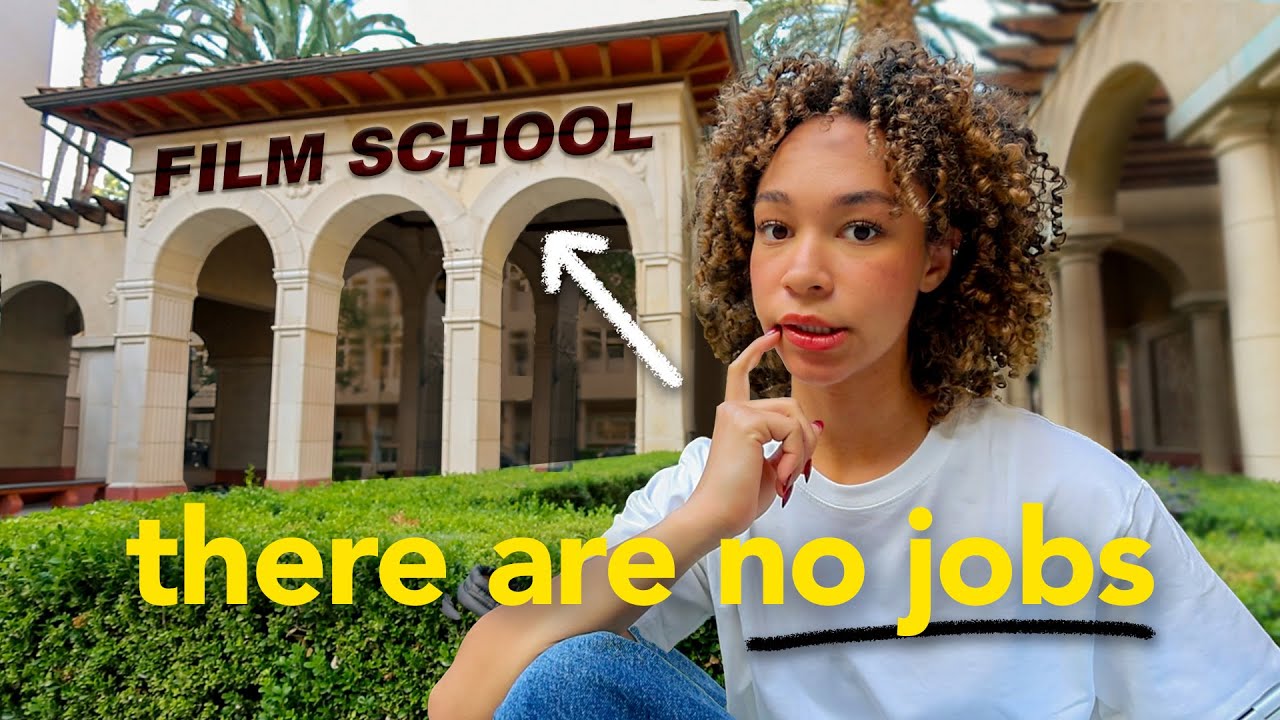
Makayla Lysiak pulled up to the wrong studio lot. She meant to meet a friend at Sony Pictures in Culver City. She ended up at Culver Studios next door, leaving her ID with a security guard who never gave it back, then spending the next ten minutes executing three-point turns on a narrow LA street while running late to a coffee she had been looking forward to all week. It is a small, absurd moment, but it captures something true about her senior year at one of the most prestigious film schools in the country: she is working incredibly hard to break into an industry that keeps making things difficult, and she is doing it with her eyes wide open. That tension, between ambition and an industry contracting around her, is what her final year of school actually looks like.
The Sony lot, a wrong arch, and what she is actually chasing
Once she finally cleared security at the right studio, Lysiak walked the Sony lot with a friend named Walter, who is there every week for a development internship. Seeing the Gen V and The Boys posters on the walls, watching Walter move through a place she wants to belong to someday, she said it plainly: ‘It’s so cool to see the people you started with come up with you.’ That afternoon she settled into a campus script library to prep for a note session on her thesis project, a show concept she scrapped and rebuilt from scratch just before the pitch deadline. Her professors, she said, are genuinely excited about the new direction. The old idea kept getting stuck. The new one does not.
That evening she rode across Los Angeles alone in a Waymo, a driverless taxi she had downloaded the app for that same afternoon, to attend a film screening and panel at a hotel in West Hollywood. The film was directed by the same person who made Challengers. The panel that followed it was moderated by someone who, by Lysiak’s account, was drunk, vaping mid-discussion, and had to be physically calmed down by a co-moderator. Lysiak described the film itself as very nuanced, very layered, and ‘pretty boring,’ but said what made the night worthwhile was the conversation with strangers in the lobby afterward, a group of people who actually wanted to talk about what they had just watched.
Why she quit her internship after two weeks and what that decision cost her
Earlier in the semester Lysiak had accepted an internship at a Black film community company after the founder offered her the position on the spot in their first meeting. She left after two weeks. The work itself was not the problem. The tasks were simple and the people were generous. The problem was the math: the internship was unpaid, September alone had included a live Instagram event and four additional brand partnerships, and every hour she gave to someone else’s company was an hour she was not spending building her own. She sent a resignation email and felt terrible about it.
But the internship story opened into something larger. Lysiak sat in the campus library reading a book review from 2007 about the writer’s strike of that era, and the parallels she found were striking enough that she read passages aloud. Studios trying to lower costs in a market with too many viewing options. Writers fighting for compensation when their work moved to a new distribution format. ‘All of the problems we are facing today have happened in the past,’ she said. The current moment, production down across Los Angeles, people leaving the industry, no clear floor, sounds to her a lot like 1930s Hollywood during the Depression, when studios cut salaries across the board. She finds that historical framing genuinely steadying, not because it makes the present easier, but because it confirms that the industry has been here before and kept moving.
The script library on a Tuesday afternoon
On a shelf behind where she set up her laptop sat a copy of the Hustlers screenplay, a Buffy the Vampire Slayer teleplay, and the script for Maleficent.
Lysiak ordered a hot dulce latte, propped her laptop on a stand to protect her neck, and got back to her paper. She has not been to a single football game this year. She has barely seen her friends. But she is, she said, actually at peace with the shape her path is taking, different from what the film school mold would prescribe, built around what she has already made rather than what she has not yet been hired to do. She still plans to make it. She just knows now that the arch she walks through to get there might not be the one she was aiming for.