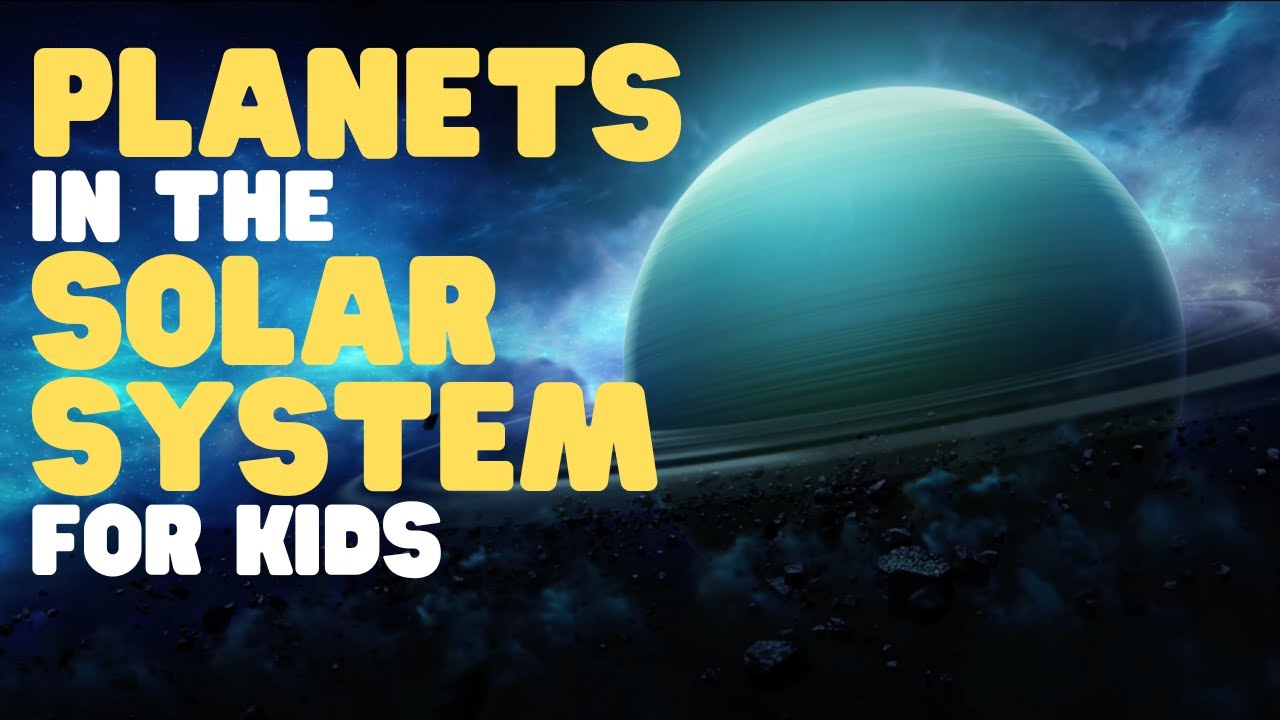
The sunlight landing on a child’s face right now left the surface of the sun eight minutes ago. That single fact, tucked into a classroom-ready journey through the solar system, is the kind of detail that stops a kid mid-sentence and makes them repeat it at dinner. Learn Bright’s tour of the sun and all eight planets builds outward from that opening jolt, turning what could be a dry memorization exercise into something closer to an actual spaceship ride.
From the smallest rock to the biggest storm
The journey begins at Mercury, the smallest planet and the one closest to the sun. It is a cratered, rocky world with no moons, and the sun’s heat is so intense it strips the atmosphere away entirely. Mercury’s day stretches to 60 Earth days, a detail that quietly reframes what the word ‘day’ even means.
Venus comes next, and it earns the title of hottest planet in the solar system. Its thick atmosphere of carbon dioxide traps heat so effectively that metals like lead exist there not as solids but as puddles of liquid. Venus also rotates in the opposite direction from most planets, and it does so with no moons at all, yet it is bright enough to spot from a backyard without any telescope.
Earth gets its moment too: 70 percent water, one moon, and the only planet in the solar system confirmed to support life. Mars follows as its cold, rust-colored neighbor, roughly half Earth’s size and home to two moons. Scientists have sent rovers to its surface specifically because ancient flood channels suggest water once moved there, and the question of whether life could ever take hold keeps researchers focused on its icy soils and thin clouds.
The asteroid belt marks the boundary before the outer planets take over, and Jupiter announces itself with scale. It is the solar system’s largest planet, a gas giant of hydrogen and helium with at least 79 moons and a storm system so enormous and so continuous it appears as a permanent red eye on the planet’s surface.
Ice giants, sideways spins, and rings you almost cannot see
Saturn’s rings are the solar system’s most recognizable feature: seven main rings built from smaller ringlets of ice chunks and rock, with at least 53 moons orbiting beyond them. The astronomer Galileo observed Saturn through a telescope as far back as the 1600s.
Uranus, discovered in 1782 by British astronomer William Herschel, is classified as an ice giant because its interior is mostly flowing icy materials including water, methane, and ammonia surrounding a small rocky core. Methane in its atmosphere gives the planet its blue color. It also holds a distinction no other planet can claim: Uranus rotates entirely on its side.
Neptune closes the tour as the farthest planet from the sun. One year there equals 165 Earth years. Like Uranus, it draws its color from methane and is built around an Earth-sized solid center wrapped in thick fog. Its six rings are difficult to see, and its 13 known moons may yet have company that has not been discovered.
The guide put one of the solar system’s sharpest contrasts plainly: ‘jupiter has at least 79 moons, the most of all the planets,’ while Saturn, often assumed to be the moon leader because of its famous rings, actually ranks second.
A cratered surface with no atmosphere and no company
Mercury sits in the dark, pocked with craters, its thin sky pushed away by solar heat, circling the sun entirely alone.
The next time a clear night opens up, eight planets are out there in various stages of their oval orbits, each spinning at its own pace, some wrapped in ice, some in storms, one tipped completely sideways, and one still warm from sunlight that left eight minutes ago.