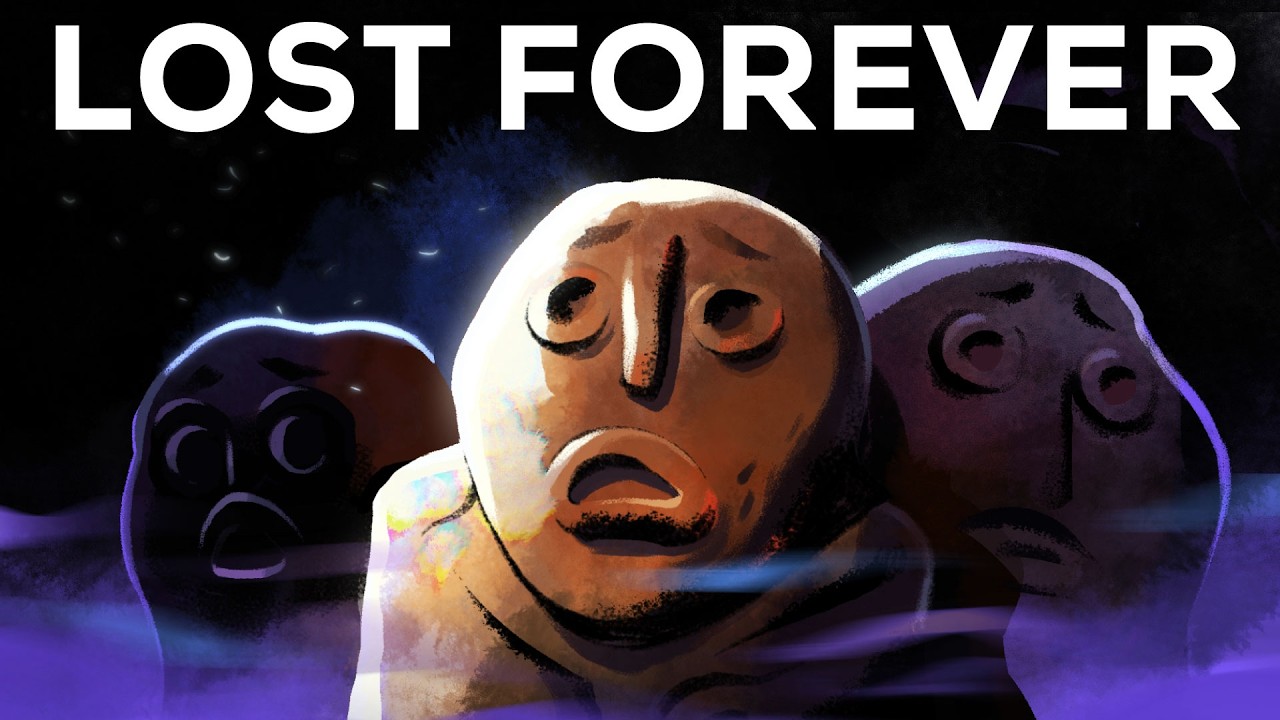
Kushim scratched his name into wet clay somewhere in the city of Uruk roughly 6,800 years into the human story, signing off on a delivery of barley headed to a temple brewery. That single mark on a tablet is the oldest known named person in history, and the fact that he was an accountant logging beer feels less like a punchline and more like a window into how ordinary the extraordinary actually is. Before Kushim, there are no names, no voices, no eyewitness accounts of any kind, only traces in stone, bone, and clay covering more than 5,000 years of civilization already in motion. Now, armed with DNA sequencing, lidar archaeology, aerial surveys, and new dating techniques, researchers are piecing together that vast, wordless chapter of the human story for the first time.
Where it all started, 12,000 years ago in the hills of southern Anatolia
The story opens not in Egypt or Greece but in the hills of southern Anatolia and northern Syria, where a site called Karahan Tepe stands as one of the earliest known villages. Around 12,000 years ago, hundreds of people gathered from tribes across the region for what was, by any measure, the largest collaborative project humanity had ever attempted. Using tools of stone and wood, they carved T-shaped columns multiple meters high directly into bedrock, decorating them with animals, birds, and figures of naked humans. The effort required a level of organization and specialization that had never existed before: while some carved all day, others gathered grain, baked bread, brewed beer, or hunted antelope to feed the builders.
The nearby site of Gobeklitepe became the largest of these constructions found so far. Nobody knows precisely why. Was an early religion taking shape? Were these gatherings purely social? The honest answer is that the names of the gods they honored, if gods they were, are gone forever.
What the archaeological record does show is that agriculture grew directly alongside ritual and community rather than before them. Permanent settlements attracted more people, which demanded more food, which drove more cultivation, which fed more specialists: craftsmen, artists, administrators. The feedback loop that would eventually produce cities had already begun.
Catalhoyuk, the climate catastrophe, and the long road to Uruk
Around 8,500 years ago, a settlement called Catalhoyuk in what is now Turkey had grown into something genuinely strange. There were no streets. Houses were packed shoulder to shoulder, entered only through holes in the roof by wooden ladder. Inside, walls were painted with animals, plastered bull skulls were set into the plaster and painted in red ochre, and figurines of women and animals filled the rooms. Families ate bread, nuts, and cheese, and drank beer. When a loved one died, they were buried under the floor. After a few years the body was exhumed, the skull removed, decorated, and painted, each family doing it in its own distinct way: some sculpting faces with plaster, others using colored stones.
Then, roughly 8,200 years ago, a catastrophe arrived from North America. A vast glacial lake, larger than the Caspian Sea, had been held in place by a massive ice dam. The dam failed. Global sea levels rose by one to two meters. The ocean current carrying warm water northward slowed. Across Europe, the Near East, and North Africa, the climate turned colder and drier, and a drought lasting well over a century parched farmland that communities had spent millennia learning to depend on.
People adapted. Some leaned on their animals, some turned to the sea, some moved their settlements to higher ground, and many simply migrated toward rivers and lakes. Kurzgesagt put it plainly: ‘Some of the most consequential journeys led into the Nile Valley, where farming villages took root and slowly laid the ground for the rich civilization that would one day rise there.’
In Mesopotamia, communities responded by bending rivers to their will, digging canals and steering floodwater onto fields. The grain surpluses that followed fed population growth that, generations later, produced the first true city-states.
Kushim and the clay tablet that ends the silence
By around 6,800 years into the human era, Uruk housed tens of thousands of people with monumental temples and a genuine urban economy. A village can run on memory and trust; a city cannot. A new class of people emerged to count grain, distribute resources, and collect taxes. To manage the complexity, they invented the first accounting system: marks on clay balls and tablets, tallying barley and sheep, which slowly evolved into actual writing.
And then came Kushim.
His name on a tablet recording barley for beer is the first personal name known to history. Beyond the signature, nothing survives: not what he looked like, not whether he drank any of the beer himself that day, not what the city smelled like at night. But that small mark closes a silence stretching back 12,000 years, standing in for every unnamed person who built a column, buried a parent under the floor, dug a canal, or crossed a continent looking for better ground.
The tablet with Kushim’s name
The clay tablet bearing that first signature sits at the end of more than five millennia of unnamed human effort. Its surface holds marks pressed into wet clay, recording a quantity of barley and a single name.
After everything that came before it, the first word written down was a receipt.