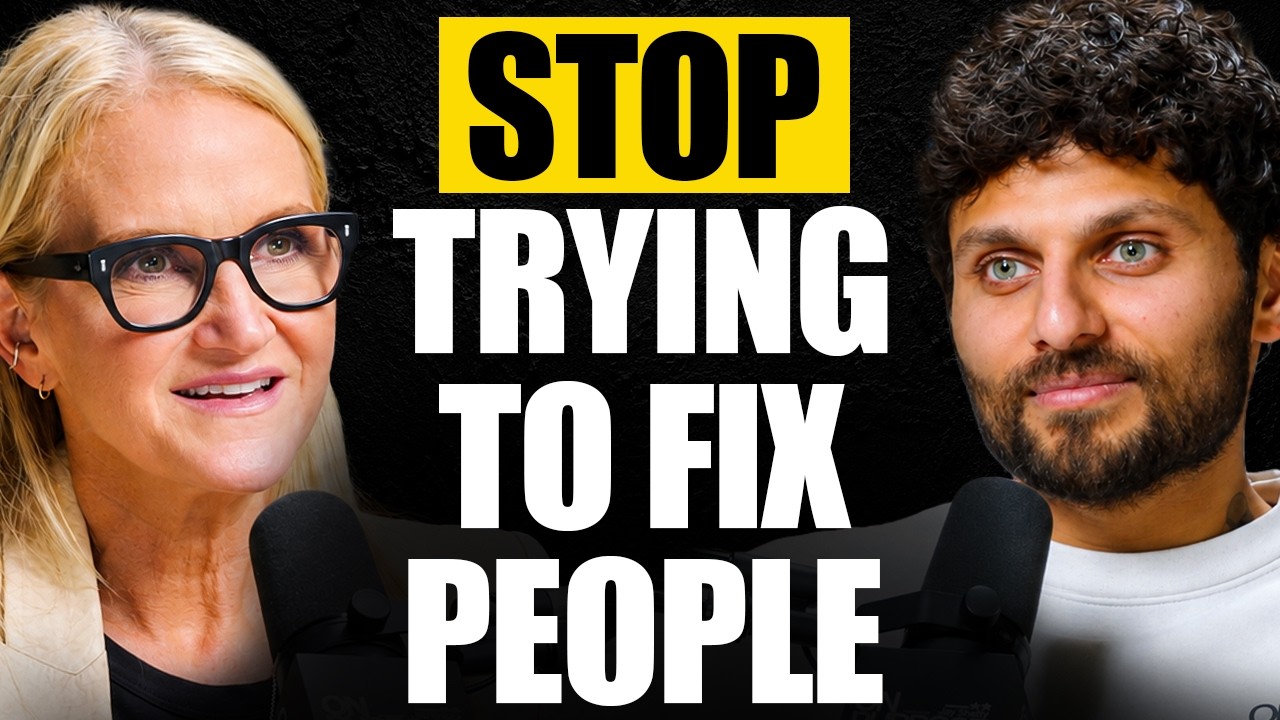
Mel Robbins did not set out to write a philosophy book. She set out to stop losing sleep over her boss’s bad moods. What she landed on, a two-part mindset tool she calls the Let Them Theory, has since been tattooed on people’s arms, debated in therapists’ offices, and applied to everything from dirty dishes in the sink to a daughter’s two-year relationship collapsing in real time. The theory is disarmingly simple, and as Robbins laid out in a conversation with Jay Shetty, its simplicity is exactly what makes it hard to dismiss.
Why ‘let it go’ feels like losing
Robbins draws a sharp line between two phrases that sound identical to most people. When a colleague steals credit for your idea or a customer decides to take out their afternoon on you, the standard advice is to let it go. Robbins spent years resisting that advice, and she finally understood why. ‘Whenever somebody would say to me, Mel, you’ve got to let it go, I’d be like, but I feel like I lost. I feel more like a doormat.’
Let them is different, she argues, because the emotional direction runs the opposite way. Instead of releasing and retreating, you detach and rise. You are not conceding the situation. You are recognizing that your boss’s mood, your colleague’s behavior, and a rude customer’s choice to stay rude are already facts in the world. Trying to manage those facts costs you energy you cannot bill back. Saying let them reclaims that energy without requiring you to pretend the situation was fine.
The second half of the tool is the part, Robbins notes, that nobody tattoos on themselves because it is harder. After let them comes let me, a deliberate return to the three things that remain inside your control at any moment: what you choose to think, what action you decide to take or deliberately withhold, and how you process the emotions already moving through you.
The dishes, the cardboard boxes, and what behavior actually reveals
Robbins applies the same two-beat structure to relationships, and here the stakes climb. Her husband Chris, she explains without any diplomatic softening, keeps his side of their bathroom sink looking like a seven-star hotel while hers looks like ‘somebody tipped over a Walgreens aisle on top of that thing.’ He has asked her to flatten cardboard boxes, to keep her products on her side, to stop stacking things by the garage door as though he will handle them. She kept forgetting.
What finally shifted was not another request. Chris sat her down calmly and named the impact rather than repeating the complaint. ‘When I see the cardboard boxes stacked or your hairbrush and 15 products on my countertop, it makes me feel like you think I’m the maid. And that doesn’t make me feel loved.’
Robbins calls that the let me move in a relationship: taking responsibility for explaining not just what you need, but why it matters to your sense of being loved. When that honest conversation happens and the other person still does not try, she argues their behavior is carrying information you are obligated to receive. ‘Their behavior is telling you the truth. Their behavior is telling you what they care about and what their priorities are.’
The second mistake she sees in relationships, the companion failure to never expressing the need in the first place, is staying anyway while building a private case in your head. She describes it as ‘living up here in your mind about the fantasy of what you wish this was, refusing to accept the reality of what it actually is.’ Research she cites puts a useful number on the recovery timeline when a relationship does end: 71 percent of people begin to feel meaningfully better by 11 weeks, provided they are not cycling through voice memos, location checks, and old photos that keep the nervous system anchored to patterns it needs to unlearn.
What Robbins learned watching her daughter grieve
The sharpest test of the theory arrived when her daughter Sawyer, who co-wrote sections of the book with her, had her two-year relationship end mid-manuscript. Robbins admits she wanted to text the boyfriend. She considered reaching out to his mother. She caught herself plotting ways to fix it.
She did none of that. She let Sawyer stay in her pajamas for four days. She knocked on the door occasionally and asked if she needed anything. She helped remove photos from shared family spaces. Her therapist, a woman Robbins describes as ‘the smartest human being I have ever met,’ offered the question she found most useful: if you knew the love of your life was literally just a couple of months away, what would you do with this time right now?
For anyone still holding on to someone who already left, Robbins offers a blunt test. If it has been a year, she says, ‘I guarantee you have not gone 30 days without listening to a voice memo or looking at a photo. You are keeping them alive, which is keeping you trapped in something that is dead.’
Sawyer’s four days in pajamas
Sawyer did not ask to be rescued from her bedroom floor. She cried, stayed still, and moved through it at her own pace, while her mother stayed close enough to knock and far enough back not to intercept the process.
The dishes are still not always done on Mel’s side of the sink.